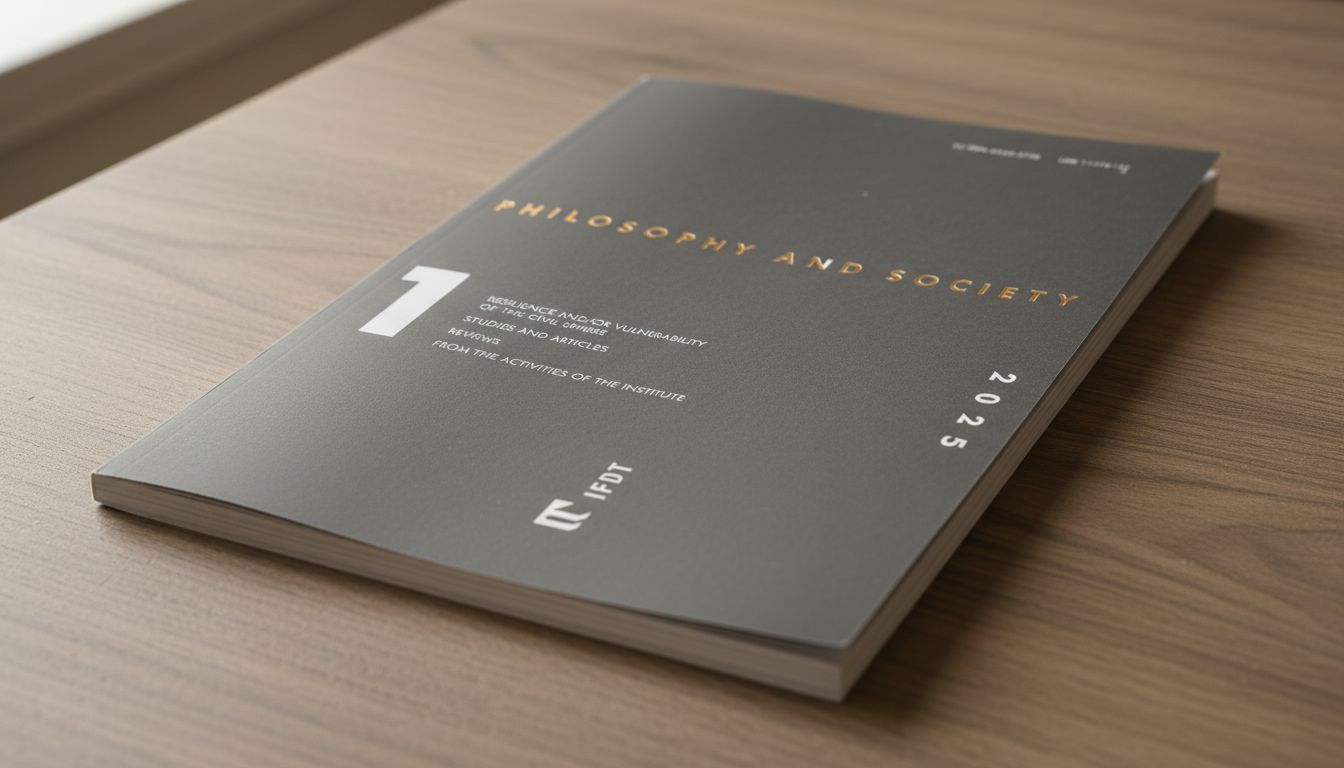
Philosophy Journals: Where Ideas Get Tested and Published
Philosophy journals are the primary venue through which philosophical arguments enter the scholarly record. A peer-reviewed philosophy journal publishes work that has survived scrutiny by other experts in the field — a process that filters out weak reasoning and holds contributors to a high standard of rigor. Top philosophy journals carry significant weight in academic hiring and promotion decisions, making them important to anyone pursuing a career in the field. Philosophy forums, by contrast, provide informal spaces where thinkers at all levels can discuss ideas, test arguments, and engage with a wider community than formal publication allows. The best philosophy journals combine editorial rigor with genuine openness to challenging ideas, not just those that confirm existing consensus. And a philosophy journal in any subfield — ethics, metaphysics, philosophy of mind, epistemology — shapes the direction of research by deciding which questions are worth asking.
This article covers how to find and evaluate journals, what the top publications in the field look like, and how online philosophy forums complement formal scholarship.
Finding the Right Philosophy Journals for Your Work
How Top Philosophy Journals Are Ranked
Philosophy journals are evaluated through several overlapping systems. The Philosophical Gourmet Report and PhilPapers both track citation counts, acceptance rates, and expert reputation surveys. Acceptance rates at top philosophy journals typically run between 2% and 8%, meaning most submissions are rejected. This selectivity is partly what gives publication in these venues its weight — not just that the work appeared, but that it survived a difficult process.
Among the most consistently cited top philosophy journals are Mind, The Journal of Philosophy, The Philosophical Review, Ethics, and Noûs. Each has a distinct character. Mind tends toward analytic philosophy with a strong tradition in philosophy of mind and language. Ethics focuses on normative theory and applied ethics. Noûs covers a wide range of analytic topics. Knowing which philosophy journal fits your work requires reading recent issues carefully, not just checking the name recognition.
Subfield Journals and Specialized Publications
Beyond the generalist top philosophy journals, subfield publications often carry equal weight within their domains. Philosophy of science has journals like the British Journal for the Philosophy of Science and Philosophy of Science. Political philosophy has Philosophy and Public Affairs. Aesthetics has the Journal of Aesthetics and Art Criticism. Researchers working in these areas often target subfield journals first, since general journals may be less well-positioned to evaluate highly specialized work.
Open access has become an important consideration. Several best philosophy journals now offer hybrid open access options, allowing authors to make their work freely available to readers who lack institutional subscriptions. PhilArchive and PhilPapers host preprints and final versions of many papers, making philosophy more accessible than it was a decade ago. This matters for global scholarship where subscription costs are prohibitive.
Philosophy forums serve a different function than journals but are not less valuable for learning and intellectual development. Communities like PhilStackExchange, the philosophy subreddits, and dedicated Discord servers allow people at all levels to discuss arguments in real time. The quality varies significantly by community, but well-moderated philosophy forums enforce standards of argument quality and citation that make them genuinely educational spaces.
Academic philosophy forums like those hosted by the American Philosophical Association or through university department blogs provide more structured discussion between professionals. These spaces often allow ideas to be tested informally before formal submission — a useful step for refining arguments and identifying objections you had not anticipated.
A philosophy journal submission process typically requires anonymized manuscripts, which means the review is blind to the author’s identity. This is meant to prevent the kind of gatekeeping where work is accepted or rejected based on institutional affiliation rather than quality. In practice, the system is imperfect — writing style and citation patterns can reveal identities — but double-blind review is widely considered better than the alternative.
The best philosophy journals also maintain detailed submission guidelines about word count, citation style, and formatting. Following these guidelines exactly is not a minor point — sloppy submissions signal that the author has not taken the process seriously, which creates a poor first impression before the manuscript is even read.
Philosophy forums and journals together form the ecosystem through which ideas develop. A question might first appear in a forum discussion, get worked into a conference paper, receive feedback that refines the argument, and eventually become a journal submission. Understanding both ends of this pipeline — the informal and the formal — makes participation in philosophical discourse more productive at any level.