Future of Social Media: What’s Changing and Why It Matters
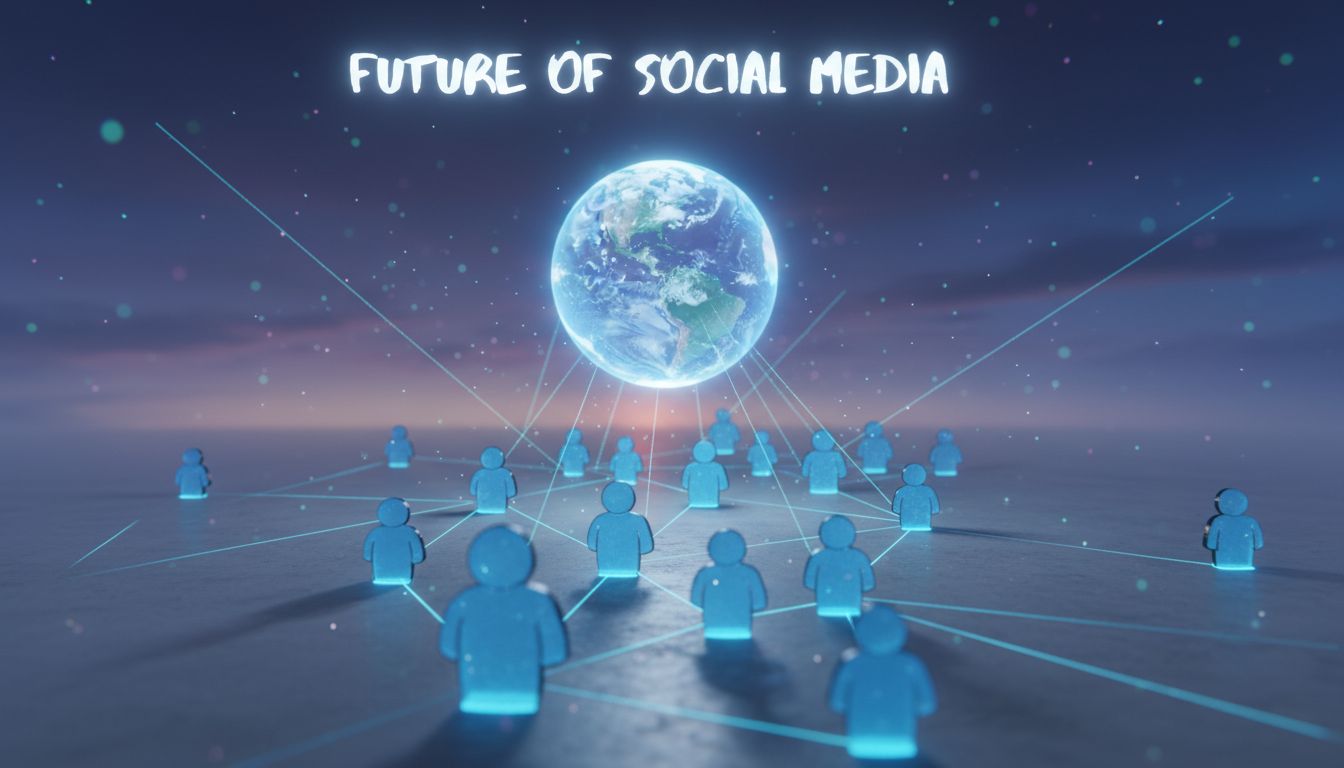
The future of social media is a question that touches nearly every part of modern life. Platforms that were once about sharing photos and status updates now shape how people learn, shop, vote, and form communities. The future of America as a democratic society partly depends on whether public conversation online becomes healthier or more fragmented. The future of us as individuals and communities is tied to what habits we build around these tools. The future of retail stores has already shifted because of social commerce — brands now sell directly through short videos and live streams. And the future of VR gaming is accelerating fast enough that it may soon change how we think about social spaces entirely.
This article traces how these trends connect, what evidence suggests about where each is heading, and what individuals can do to stay oriented amid rapid change.
How the Future of Social Media Shapes Everything Else
Social platforms are no longer neutral channels for communication. Their algorithms determine what content spreads and what gets buried. That selection process has political, commercial, and psychological consequences that researchers are still working to understand. The future of social media will be defined by how platforms respond to pressure for transparency, whether regulation catches up to technology, and what users demand in return for their attention.
Short-form video has become the dominant format. TikTok, Instagram Reels, and YouTube Shorts have trained audiences to consume content in bursts of fifteen to sixty seconds. Long-form writing and nuanced argument have fewer natural homes than they did a decade ago. This shift has implications for the future of us as readers and thinkers — attention spans have measurably compressed in contexts where short-form content dominates.
The future of America in terms of political discourse runs directly through social media. Studies from MIT, Stanford, and New York University have found that misinformation spreads faster than accurate information on major platforms. Recommendation algorithms optimize for engagement, and outrage is one of the strongest engagement drivers. Policy debates, election cycles, and public health crises are all distorted to some degree by these mechanics.
Platform decentralization is one potential response. Federated networks like Mastodon and decentralized protocols like AT Protocol allow users to move between servers without losing their social graph. If these models gain enough adoption, the future of social media may involve less dependence on any single company’s algorithm or moderation decisions.
The future of retail stores depends on how social commerce evolves. Brands like Walmart, Amazon, and hundreds of small businesses now generate significant sales through TikTok Shop, Instagram Shopping, and live-stream selling events. The physical store is not disappearing, but its role is changing. It becomes a place for experience, pickup, and returns — while discovery and purchase happen online. Retail spaces that survive will likely specialize in things that video cannot replicate: texture, smell, personalized fitting, and immediate possession.
The future of retail stores also involves AR try-on tools, which social platforms are actively building. IKEA, Sephora, and Warby Parker have already deployed augmented reality features that let users see how products look in their homes or on their faces before buying. When this technology becomes standard on major social platforms, the conversion gap between scrolling and purchasing will shrink further.
The future of VR gaming sits at the intersection of gaming, social interaction, and commerce. Meta has invested billions in its VR ecosystem, betting that people will eventually prefer to meet, work, and play in virtual spaces. Current adoption is still limited by hardware cost, comfort, and the need for shared social spaces to reach a critical mass of users before they feel worth visiting. But the technology is improving faster than the social adoption curve.
The future of VR gaming changes the future of social media in a structural way. If people spend hours in virtual environments, the flat-screen scroll becomes a secondary interface. Social interaction inside VR happens through avatars, spatial audio, and shared virtual objects — a fundamentally different experience from liking posts or watching videos. Companies building for this future are designing new forms of social identity and community around persistent virtual worlds.
The future of us in this environment requires intentional choices. Every platform is designed to capture attention and convert it into ad revenue or data. Awareness of that design is the starting point for using these tools without being used by them. Setting time limits, curating feeds actively, and seeking out sources that challenge rather than confirm your existing views all help maintain a more grounded relationship with social media.
Pro tips recap: Follow researchers who study platform effects rather than only platform influencers. Diversify the formats you consume — long reads, podcasts, and in-person conversation all process information differently than short-form video. And watch the future of VR gaming not just as entertainment but as a signal of where social spaces are heading next.