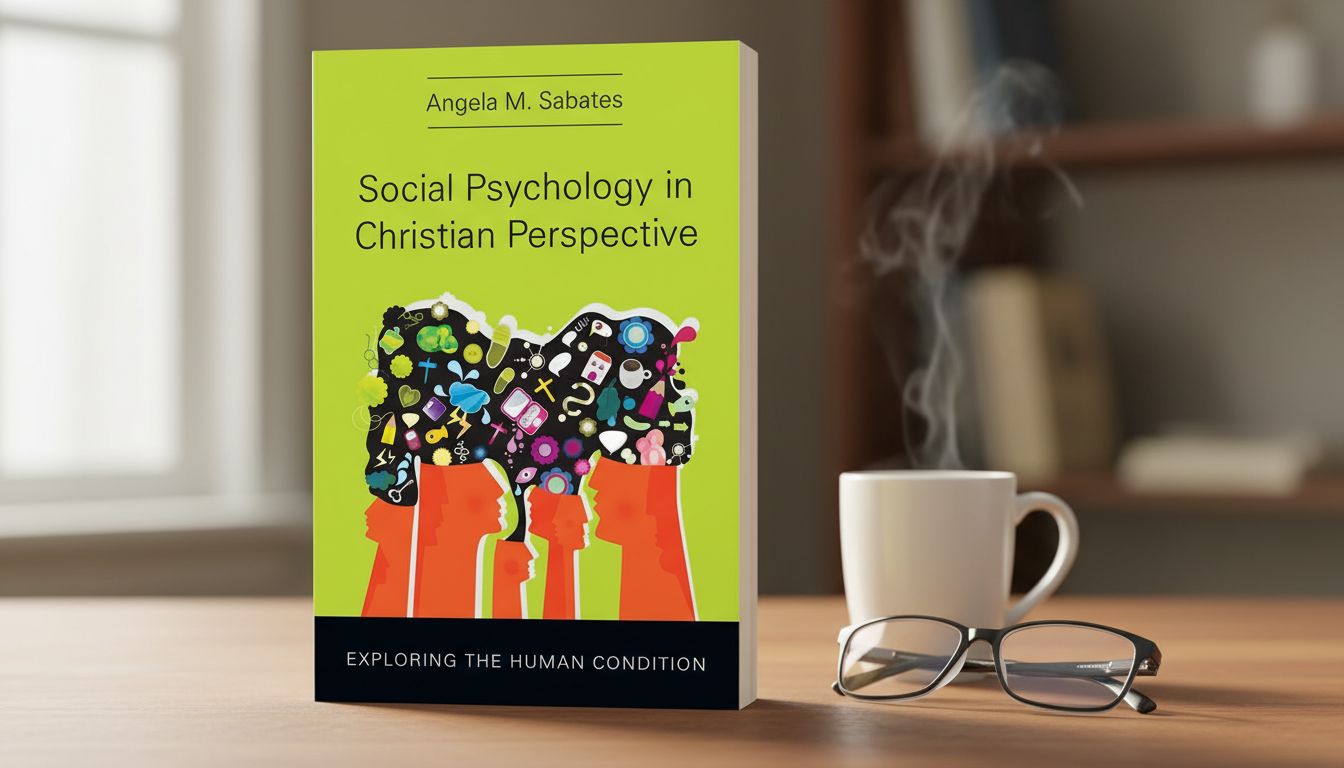
Christian Psychology: Faith, Money, Fashion, and Critical Perspectives
Christian psychology explores how Christian theology and psychological science can be integrated to understand human nature, suffering, and healing. It’s a recognized subdiscipline with academic programs, professional associations, and ongoing debates about what integration actually means. Money psychology examines how beliefs, emotions, and cognitive patterns shape financial behavior, often revealing surprising irrationality in people who consider themselves financially savvy.
Fashion psychology studies how clothing affects identity, mood, and social perception. Critical psychology interrogates the assumptions behind mainstream psychological research, asking whose values it reflects and whose it ignores. And biblical psychology specifically draws on scripture as a source of understanding human nature alongside or instead of secular theory.
What Christian Psychology Actually Claims
Christian psychology holds that a complete understanding of human beings requires both empirical research and theological reflection. It doesn’t reject science. It argues that science alone, without a framework for meaning, purpose, and the spiritual dimensions of experience, produces an incomplete picture.
Key figures in christian psychology include Stanton Jones, Mark McMinn, and Eric Johnson. They differ on how much priority to give scripture versus empirical research, but they share the conviction that integration is both possible and necessary. Christian psychology is taught at institutions like Biola University, Wheaton College, and Fuller Seminary.
Biblical Psychology and Its Distinct Approach
Biblical psychology takes a stronger position than general christian psychology. It holds that scripture provides direct insight into the structure of the human mind, emotions, and will. Practitioners in this tradition read biblical texts as psychological documents, not just spiritual ones.
Biblical psychology overlaps with pastoral counseling but extends further into interpretive work. Proponents argue that the biblical account of human nature, including concepts like the heart, soul, spirit, and conscience, maps onto real psychological structures. Critics within the broader christian psychology community argue this conflates literary and empirical categories.
Money Psychology: Why We Make Bad Financial Decisions
Money psychology covers the emotional and cognitive patterns that drive financial behavior. Loss aversion, a well-documented finding, shows that losses feel roughly twice as painful as equivalent gains feel good. This asymmetry explains why people hold losing investments too long and sell winners too early.
Money psychology also addresses financial avoidance, the pattern of not checking accounts or opening bills because the anxiety is too high. This avoidance protects short-term comfort at the cost of long-term control. Financial therapists who work at the intersection of money psychology and counseling address both the emotional and the behavioral dimensions of money problems.
Fashion Psychology: Clothing and the Self
Fashion psychology examines how clothing choices affect how people feel and how others perceive them. The concept of “enclothed cognition,” developed by researchers Adam and Galinsky, shows that wearing clothing associated with specific roles can shift thinking and performance. Wearing a lab coat increased attention to detail in studies, even when participants were told it was just a painter’s coat.
Fashion psychology also addresses how clothing signals group membership, status, and values. People make quick judgments about others based on dress within milliseconds. These judgments are often wrong, but they happen anyway. Understanding fashion psychology helps explain why dress codes in professional settings carry so much social weight.
Critical Psychology and Its Challenge to the Mainstream
Critical psychology argues that mainstream psychology has consistently reflected the values of Western, educated, industrialized, rich, and democratic populations while claiming universal applicability. It questions diagnostic categories, therapeutic goals, and research methods that embed cultural assumptions without acknowledging them.
Critical psychology has influenced how clinicians think about pathology versus difference. What gets labeled a disorder depends partly on what a given culture defines as normal. Critical psychology pushes practitioners to ask who benefits from a given diagnostic or treatment framework and whether it serves the people it claims to help.
The conversation between christian psychology, biblical psychology, money psychology, fashion psychology, and critical psychology isn’t just academic. Each tradition asks a version of the same question: what are we, why do we behave as we do, and how do we change? The answers differ, but the question holds them together.