Spontaneous Recovery Psychology Example and Key Conditioning Concepts
A spontaneous recovery psychology example helps clarify one of the more surprising aspects of classical conditioning: extinguished behaviors can return on their own after time passes. Understanding this alongside a schema psychology example and a generalization psychology example gives you a clearer map of how learning actually works in the brain.
Schema theory psychology explains how organized knowledge structures shape perception and memory. And a parallel processing psychology example shows how the brain handles multiple streams of information simultaneously. These concepts each reveal something distinct about cognition, but they also connect in important ways.
Core Conditioning and Cognitive Concepts Explained
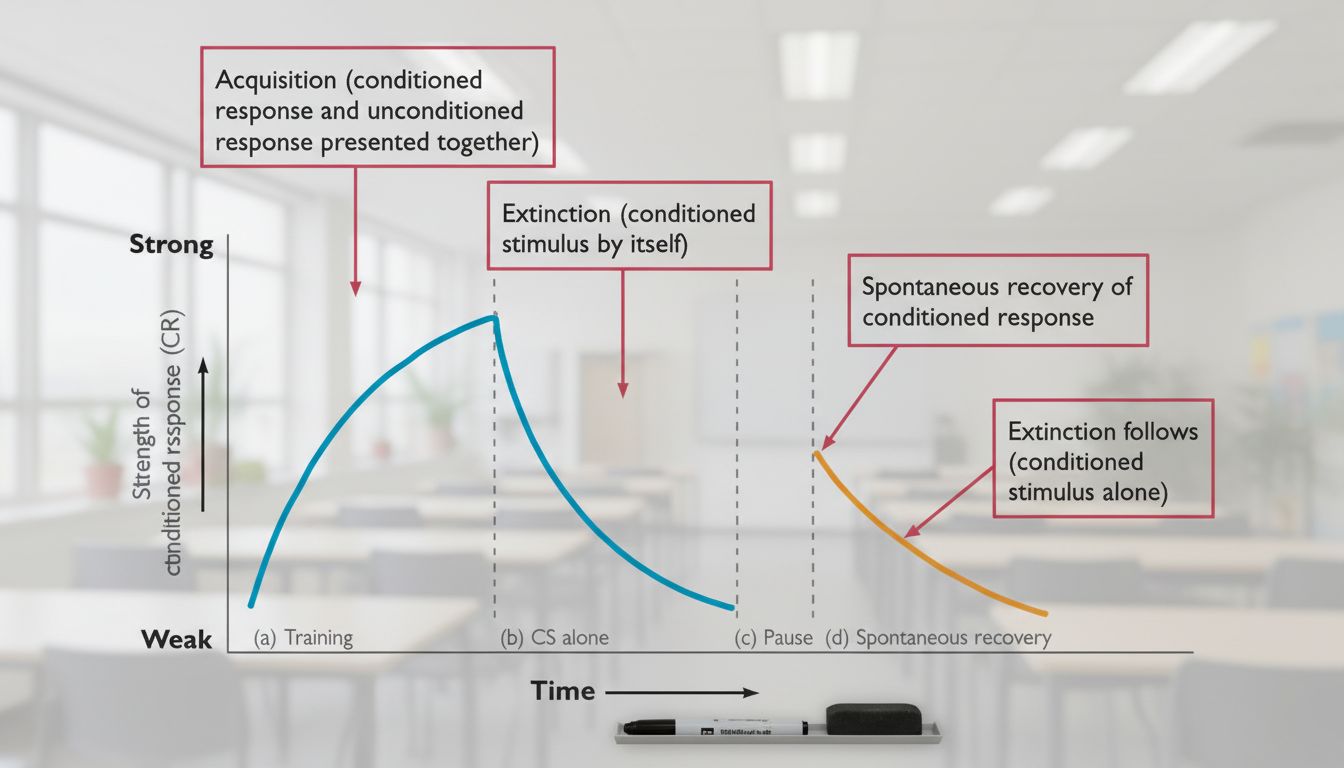
Spontaneous recovery happens when a conditioned response that was extinguished reappears after a rest period without any new training. A spontaneous recovery psychology example: a dog conditioned to salivate at a bell, then trained through extinction to stop, begins salivating again at the bell after a night’s rest. No new pairings occurred. The behavior returned on its own.
This matters because it shows extinction doesn’t erase learning. It suppresses it. The original association stays in memory and can resurface under the right conditions. Therapists working with phobias or addictions account for this when designing relapse prevention strategies.
A schema psychology example involves reading a story about going to a restaurant. Your brain doesn’t process each sentence in isolation. It activates a restaurant schema, a stored framework including menus, waitstaff, payment, and seating. This schema fills in gaps and speeds up comprehension, but it can also distort memory toward expected details rather than actual ones.
Schema theory psychology explains why eyewitness memory is unreliable. When you recall an event, you partly reconstruct it through your schemas. Details that didn’t fit your expectations often get replaced with schema-consistent details. This is memory distortion through structure, not malice.
A generalization psychology example: after being bitten by a large dog, a child becomes afraid of all dogs, not just large ones. The conditioned fear response has spread, or generalized, from the specific stimulus to a broader category of similar stimuli. Generalization is adaptive in many contexts, but it can also drive irrational fear when applied too broadly.
In operant conditioning, generalization works similarly. A student praised for asking questions in one class tends to ask more questions in other classes too. The rewarded behavior generalizes across settings. Teachers who want to build confident learners benefit from understanding how this transfer works.
Schema theory psychology and generalization are closely linked. Schemas organize the categories your brain uses, and generalization determines how broadly those categories get applied. A child who schemas librarians as quiet and helpful may generalize that expectation to all library visits, which can lead to confusion when behavior falls outside the template.
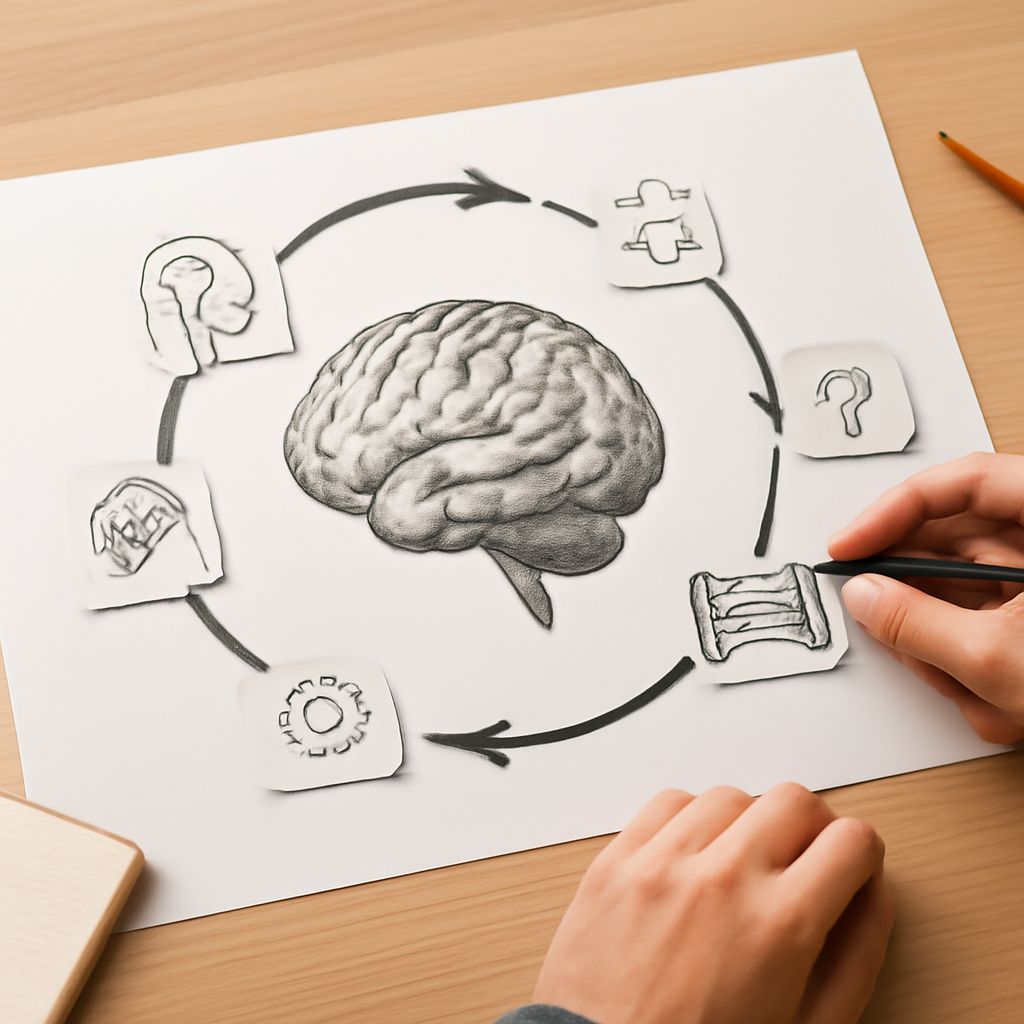
A parallel processing psychology example comes from reading. While you consciously parse sentence meaning, your brain simultaneously processes letter shapes, sounds, emotional tone, and syntactic structure. These streams run in parallel, not in sequence. The result feels seamless, but it involves massive simultaneous computation.
Parallel processing psychology challenges older serial models of cognition that assumed the brain handled one thing at a time. Modern neuroscience shows that perception, emotion, memory retrieval, and motor control all proceed in parallel streams that converge and interact constantly. This explains why distractions affect performance: competing parallel processes interfere with each other.
Each of these concepts, from the spontaneous recovery psychology example to parallel processing, reflects a different aspect of how learning is stored, organized, and deployed. Together they describe a brain that is adaptive, efficient, and sometimes surprisingly fragile.
Bottom line: a spontaneous recovery psychology example reveals that extinction suppresses rather than erases learning. Schema psychology examples and schema theory psychology show how organized knowledge speeds comprehension but distorts recall. A generalization psychology example demonstrates how responses spread from specific stimuli to categories. And a parallel processing psychology example illustrates the simultaneous nature of cognition.