Robot Barista and Coffee Robot: From Yard Robot to Robot Helmet in the Age of Automation
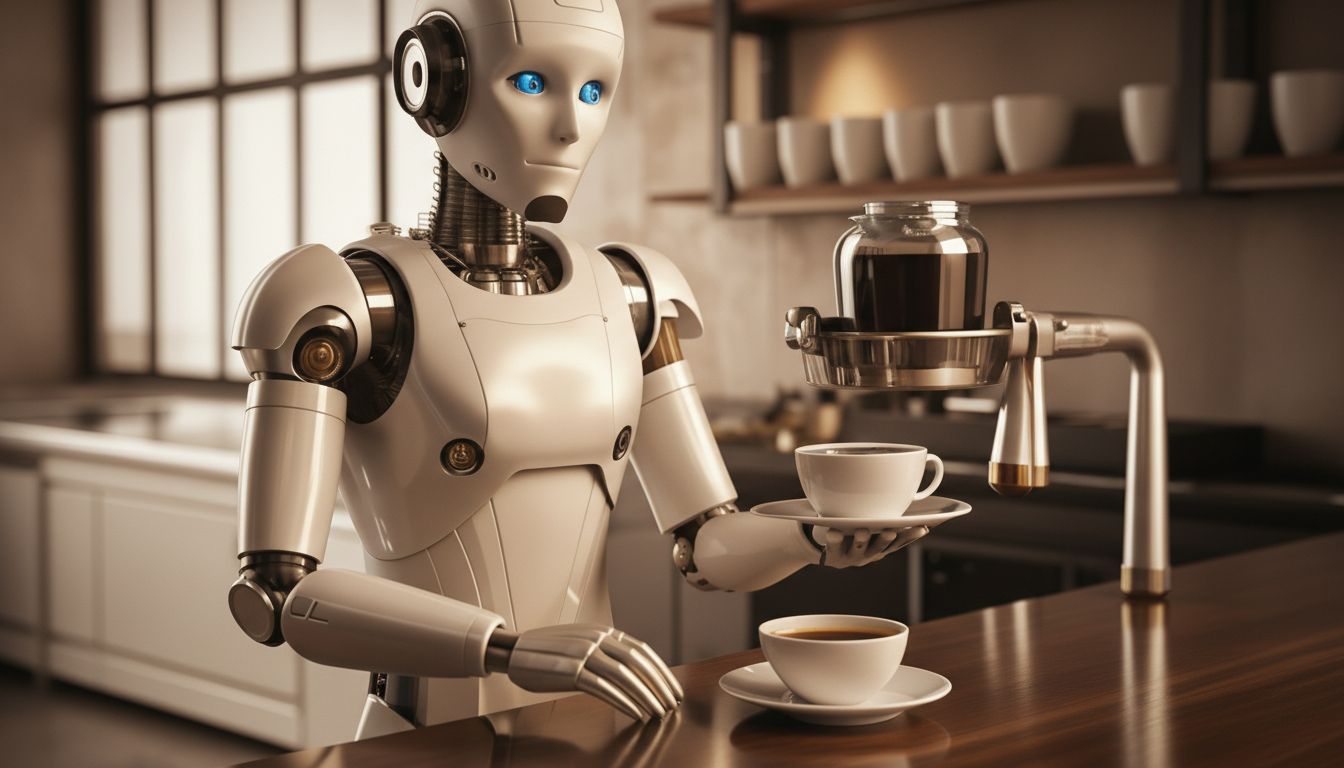
A robot barista makes coffee using automated systems that replicate the steps a human barista performs: grinding, dosing, tamping, extracting, and often frothing milk. A coffee robot can refer to the same kind of machine or, more broadly, to any automated system involved in coffee production, from green bean sorting to packaging. The robot helmet has two distinct meanings: a wearable helmet with integrated robotic or electronic features, and a costume or prop that looks like a robot’s head. A robot base in robotics refers to the platform component that provides mobility to a robotic system. And a yard robot is an autonomous machine designed to perform outdoor maintenance tasks like lawn mowing, leaf collection, or snow removal.
Each of these terms describes a real and growing category of robotic technology that is changing how people interact with machines in daily life.
Robot Barista to Yard Robot: How Everyday Robotics Is Changing Daily Life
The robot barista concept moved from concept to commercial reality faster than most industry observers expected. Companies including Cafe X, Richtech Robotics, and Briggo deployed robot barista systems in airports, corporate campuses, and high-traffic food service locations starting in the late 2010s. These systems can serve hundreds of cups per hour with consistent quality, operating continuously without breaks or quality variance caused by fatigue.
The business case for a robot barista is straightforward in high-volume environments: reduced labor cost, consistent output, and the ability to operate without staffing constraints. The social case is more complex. Barista work has a relational dimension, and regular customers often value the human connection of their morning coffee interaction. Some coffee robot deployments have found that they work best as supplements to human staff rather than full replacements, handling peak volume while human baristas focus on complex orders and customer relationships.
A coffee robot can also refer to industrial automation in the coffee supply chain. Green bean sorting robots use computer vision to identify and reject defective beans at speeds and accuracy levels far beyond human hand-sorting. Roasting control systems that automatically adjust time, temperature, and airflow parameters are coffee robots in the production sense. And in specialty coffee packaging, robotic systems handle precision weighing and nitrogen-flush sealing that maintains freshness without human contact.
The robot helmet category spans a wide range of applications. In industrial settings, helmets with integrated sensors, displays, and communication systems are deployed in manufacturing and construction environments where workers need hands-free access to instructions, safety data, and communication. These are robot helmets in the augmented human sense, tools that give human workers machine-level information access without removing them from the task.
In consumer and entertainment markets, the robot helmet is primarily a costume and cosplay item. The rise of robotics in popular culture, from cinema androids to real-world robot competitions, has created a substantial market for high-quality robot helmet costumes. 3D printing has made custom robot helmet designs accessible to hobbyists who can download designs, print components, and assemble functional LED-lit helmets for a fraction of what professional prop builders charge.
The robot base is the foundational component in mobile robotics. A robot base provides the mobility platform: wheels, tracks, or legs, along with the motors, controllers, and sensors that enable navigation. Standard robot base platforms from companies like Clearpath Robotics, TurtleBot, and Boston Dynamics provide researchers and developers with tested hardware that can be configured for different applications without requiring each team to build mobility from scratch.
In commercial deployment, a robot base that works reliably across varied floor surfaces, handles obstacles predictably, and integrates cleanly with software systems is the critical limiting factor for many indoor service robot applications. The robot barista’s ability to serve customers depends entirely on its mobility system working without intervention across thousands of daily cycles.
The yard robot category is led commercially by autonomous lawn mower systems from Husqvarna, Worx, and several others. These systems use GPS boundary mapping, sensor-based obstacle avoidance, and scheduled operation to maintain lawns without human involvement beyond initial setup. The category has expanded into snow clearing, leaf collection, and edging robots as sensor technology and battery density have improved.
Adoption of yard robot systems has been fastest in commercial landscape maintenance applications, where the economics are clearest. A yard robot running continuously overnight can maintain large commercial properties at a fraction of the labor cost of traditional crews. Residential adoption is growing but remains price-sensitive: current yard robot systems cost several hundred to several thousand dollars depending on capability, which represents a long payback period for most homeowners compared to manual mowing.