Psychology Jokes: Funny Psychology Puns and Philosophy Humor That Actually Make Sense
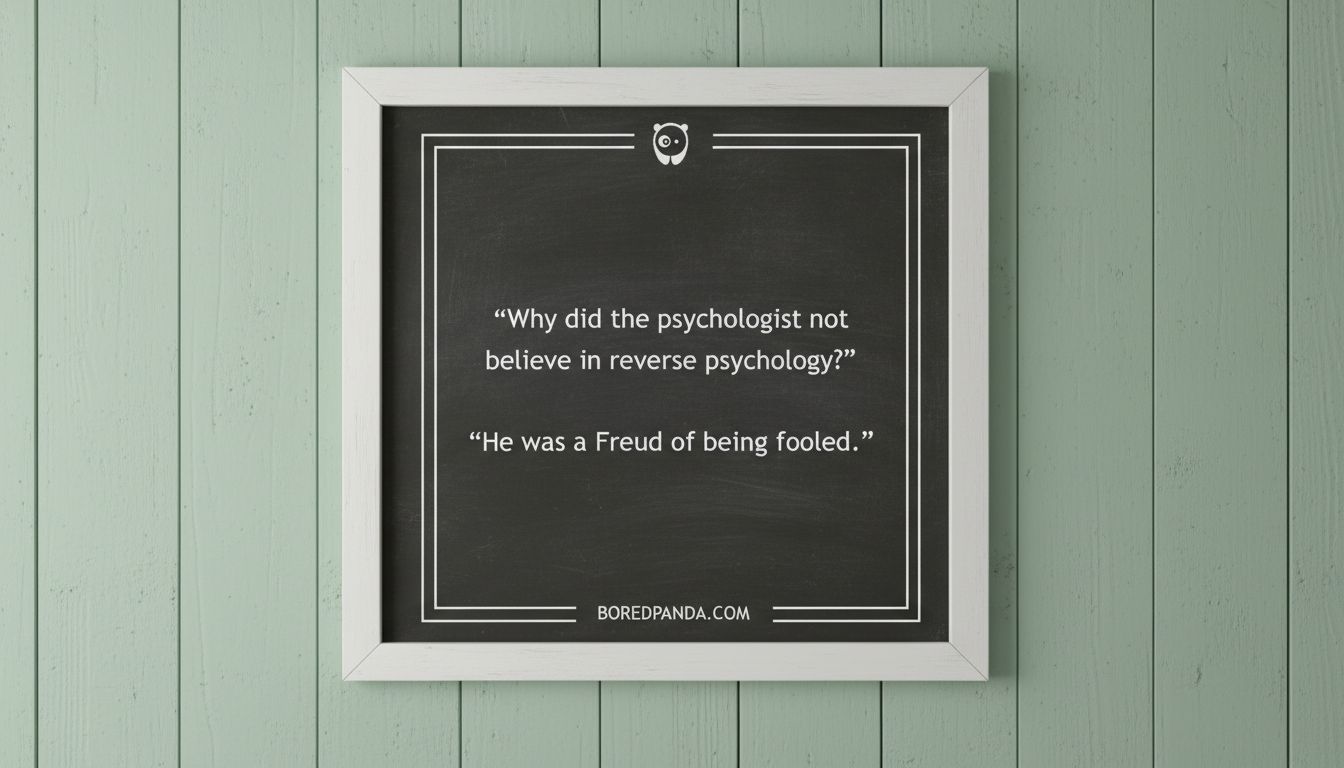
Psychology jokes occupy a unique corner of nerd humor — they reward people who know just enough theory to get the punchline. A great psychology pun uses the language of the discipline against itself: conditioning, projection, repression, and transference all carry double meanings ripe for comedy. Funny psychology jokes land best when they make you groan and think at the same time. Philosophy puns extend the tradition into even more abstract territory — Plato and Descartes are surprisingly good comedic material once you know their positions. A well-constructed psychology joke is not just funny; it is an efficient way to remember a concept. If a joke makes you recall the idea later, it did more than entertain — it taught.
This article collects the best psychology jokes and philosophy puns by type, and explains the theory behind why academic humor works so well.
Classic Psychology Jokes and How They Work
The Structure of a Good Psychology Pun
The best psychology jokes use technical terms with everyday double meanings. Consider: “Why did the therapist refuse to play poker? Because she kept calling out everyone’s bluffs.” That is a psychology pun built on the dual meaning of “calling out” in therapy (confrontation) versus cards (verbal challenge). The setup is quick, and the punchline exploits the overlap.
Funny psychology jokes also work by personifying theoretical concepts. “Freud walks into a bar. He asks the bartender for a slip.” This psychology joke turns the Freudian slip — an accidental verbal error revealing an unconscious thought — into a physical request. The humor requires just enough prior knowledge to land, which is why it delights people with a psychology background and leaves everyone else confused.
Psychology puns in educational settings lower anxiety around dense material. A teacher who opens a lecture on defense mechanisms with a psychology joke about repression sends a signal: this topic is serious, but we can still laugh. Humor improves retention because it tags content with a positive emotional marker.
Philosophy Puns: Humor at the Limits of Knowledge
Why Philosophers Make Surprisingly Good Comedy Material
Philosophy puns mine the same territory as psychology jokes but go deeper into abstraction. A classic: “Rene Descartes walks into a bar. The bartender asks ‘Would you like a drink?’ Descartes says ‘I think not’ — and disappears.” That philosophy pun collapses the famous cogito (“I think therefore I am”) into its logical inverse.
Funny psychology jokes and philosophy puns share a structure: they require the listener to hold two meanings simultaneously. The humor emerges from the collision. Socrates, Nietzsche, Kant, and Plato all offer rich material because their core ideas are so extreme that slight exaggeration tips them into comedy.
“Why did Nietzsche refuse to go out? He found it beyond good and evil.” That is a philosophy pun that only works if you know the title of one of Nietzsche’s most famous books. These are insider jokes — they reward familiarity and reinforce community among people who share a knowledge base.
Using Psychology Jokes and Philosophy Puns in Teaching
A well-placed psychology joke during a lecture on confirmation bias helps students remember what confirmation bias actually means. The joke creates a memory anchor — the feeling of the punchline is attached to the concept, making recall easier. Teachers and professors who use funny psychology jokes strategically report higher engagement during otherwise abstract sections.
Psychology puns also work in written content. An article on cognitive dissonance that opens with a psychology joke about holding contradictory beliefs performs better in terms of reading time and retention than one that opens with a dry definition. Humor signals that the writer is confident enough in the material to play with it.
Philosophy puns in academic writing follow the same logic. A paper that makes a knowing reference to Descartes in its title signals intelligence and self-awareness. The best academic writers use humor sparingly but effectively — a psychology joke landed at the right moment makes the serious points land harder.
Bottom line: psychology jokes and philosophy puns work because they require knowledge to decode, reward familiarity, and create memorable emotional anchors. The best funny psychology jokes are not just clever — they are efficient communication tools that make abstract ideas stick. If you want to make a concept unforgettable, try wrapping it in a psychology pun.