Shaping in Psychology: Definition, Examples, and How It Works
Shaping in psychology is a behavioral technique that uses step-by-step reinforcement to teach new behaviors. If you have ever wondered what is shaping in psychology, the short answer is this: it is the process of reinforcing successive approximations toward a target behavior. Psychology shaping builds on the principles of operant conditioning, first described by B.F. Skinner. The definition of shaping in psychology covers both the method and the theory behind why reinforcing small steps leads to complex behavior. Shaping psychology examples range from training animals to helping children with developmental delays learn new skills.
This technique is widely used in clinical settings, education, and animal training. Understanding shaping helps explain how even difficult behaviors can be learned with the right plan.
The Definition of Shaping in Psychology
How Operant Conditioning Drives Psychology Shaping
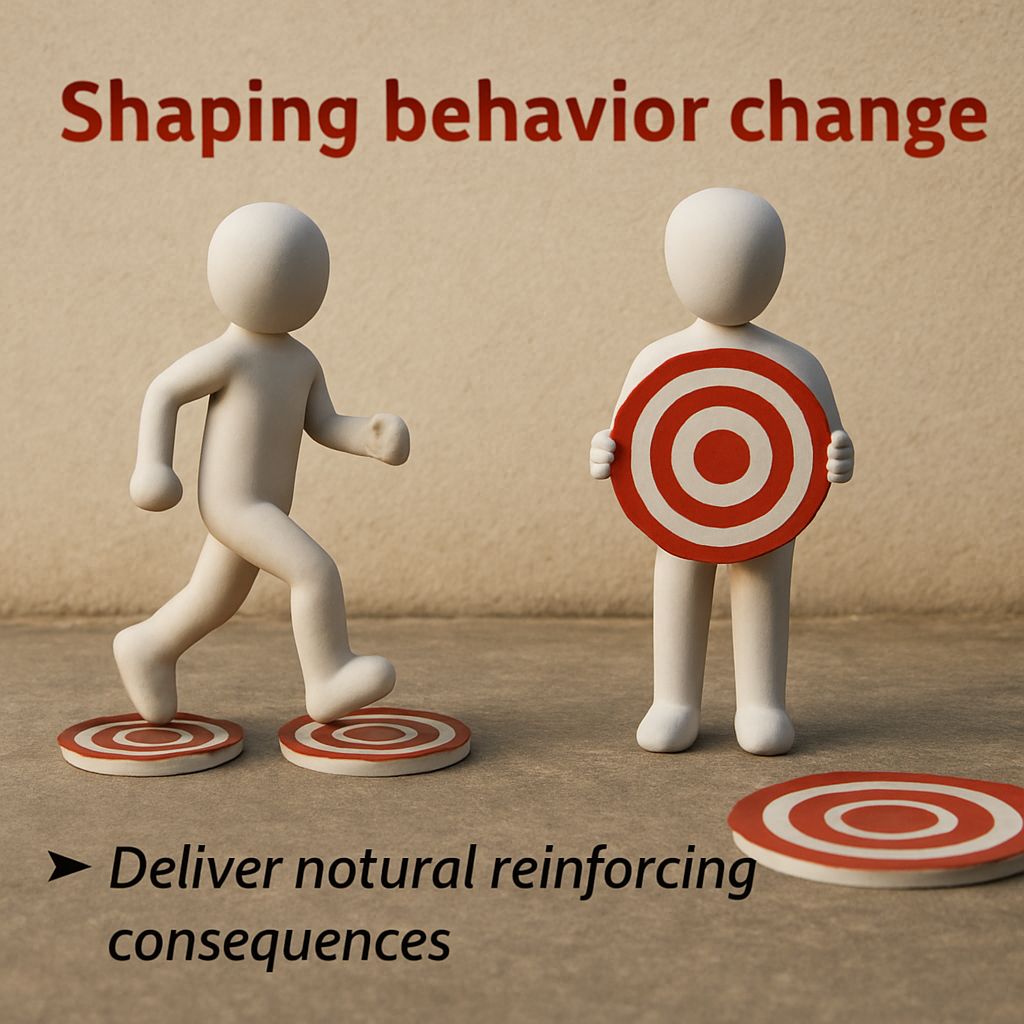
The definition of shaping in psychology centers on differential reinforcement. You reinforce only the behaviors that come closest to the goal, and you ignore or redirect those that do not. Over time, the standard rises. Each reinforced step gets closer to the desired outcome. This is how shaping in psychology differs from simple reward-based training — the bar keeps moving.
Operant conditioning principles underpin psychology shaping. Reinforcement can be positive (adding something desirable) or negative (removing something unpleasant). In both cases, the behavior that gets reinforced is more likely to occur again. Shaping uses this mechanism systematically.
A classic shaping psychology example from Skinner’s research involves training a rat to press a lever. The rat is first rewarded for moving toward the lever, then for touching it, then for pressing it. Each step is a successive approximation. What is shaping in psychology if not this careful scaffolding of behavior?
Shaping Psychology Examples in Real Life
Applications Across Education, Therapy, and Animal Training
Shaping psychology examples appear in many everyday contexts. Parents use shaping when they praise a toddler for holding a spoon before expecting them to use it correctly. Teachers use it when they reward effort before expecting accuracy. These are informal versions of the same technique.
In clinical psychology, shaping in psychology helps clients with phobias through exposure therapy. A person afraid of dogs might first be reinforced for looking at a photo, then for standing near a dog from a distance, and eventually for touching one. The graduated steps reduce anxiety and build confidence.
Applied behavior analysis (ABA) relies heavily on psychology shaping for children with autism. Therapists break complex skills — like asking for help or using a spoon — into tiny steps. Each step is reinforced until the full behavior is established. The definition of shaping in psychology is put into practice here every day.
Common Mistakes When Using Shaping Techniques
One common error is moving too fast. If the step from one level to the next is too large, the learner gets stuck and reinforcement stops coming. Good shaping in psychology means setting steps that are just challenging enough. Moving too slowly wastes time, but moving too fast breaks the chain.
Another mistake is inconsistency. Reinforcing a behavior one day and ignoring it the next sends mixed signals. Psychology shaping requires a clear plan and consistent application. Without consistency, learning slows or stops.
Shaping psychology examples from poorly executed plans often show what happens when the reinforcer loses its value. If a child is rewarded with stickers but stops caring about stickers, the shaping process breaks down. The reinforcer must remain motivating throughout the process.
Bottom line
Shaping in psychology is one of the most effective tools in behavioral science. From training animals to teaching children with developmental needs, psychology shaping works by breaking big goals into small, manageable steps. Knowing the definition of shaping in psychology and how to apply shaping psychology examples in real settings gives educators, therapists, and parents a concrete way to support learning.