Estar in Future Tense: Spanish, Arabic, and Russian Future Conjugation Compared
Knowing estar in future tense is a foundational step in Spanish grammar. Unlike ser (the other “to be” verb), estar follows a regular pattern in the future — but knowing exactly how requires understanding the full conjugation system. The future tense of estar appears in everyday Spanish conversation for predictions, states, and scheduled situations. Understanding future tense estar becomes even richer when you compare it to how other languages handle future time — like the arabic future tense, which uses a prefix system entirely unlike Romance languages, or the russian future tense, which divides into imperfective and perfective forms. Each language solves the “future” problem differently, and seeing those differences sharpens your understanding of all of them.
This guide covers estar’s future conjugation in depth, then offers comparative notes on Arabic and Russian.
Estar in Future Tense: Full Conjugation
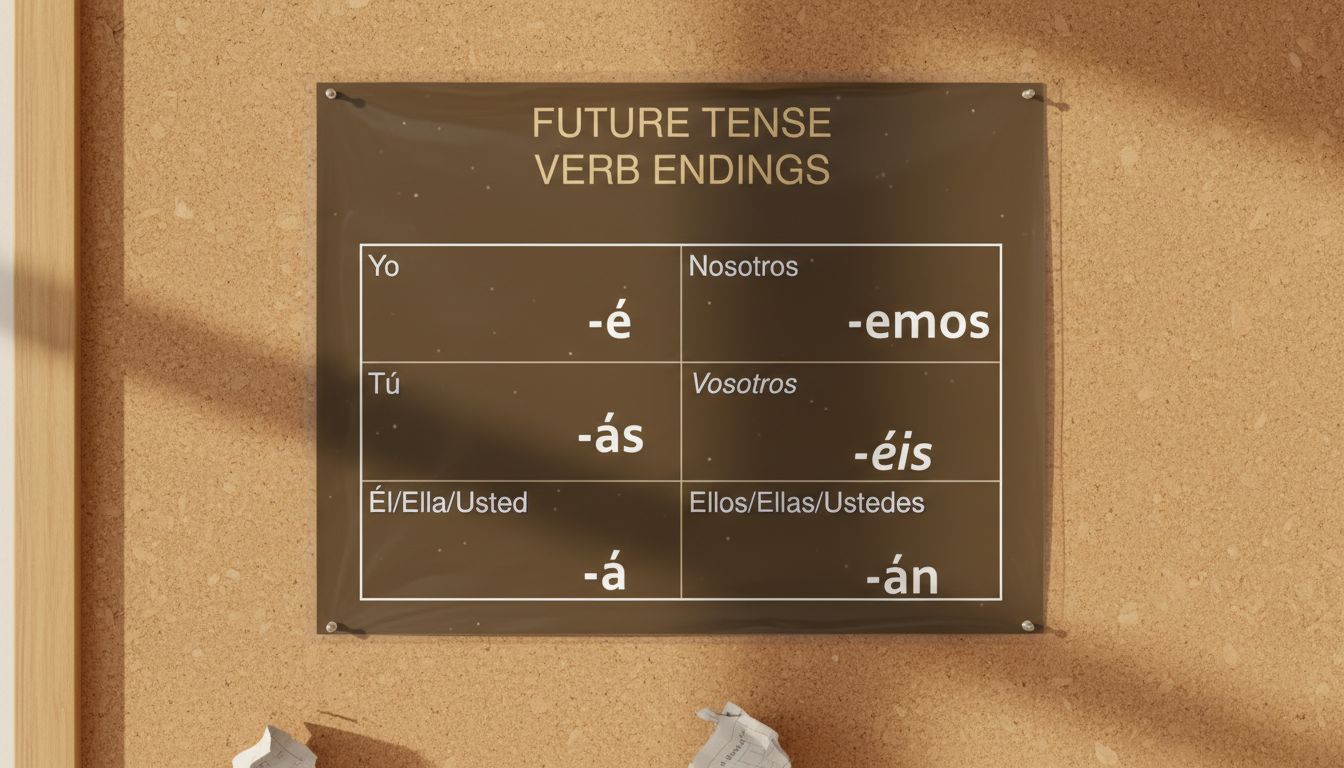
The future tense of estar is entirely regular. The stem is estar- (the full infinitive, no changes), and you add the standard Spanish future endings: -é, -ás, -á, -emos, -éis, -án.
Complete conjugation of estar in future tense:
- yo estaré — I will be
- tú estarás — you will be
- él/ella/usted estará — he/she/you (formal) will be
- nosotros estaremos — we will be
- vosotros estaréis — you all will be (Spain)
- ellos/ellas/ustedes estarán — they/you all will be
Example sentences using future tense estar: Mañana estaré en la oficina. (Tomorrow I will be in the office.) ¿Dónde estarás este fin de semana? (Where will you be this weekend?) The verb describes location, temporary state, and condition — estar’s standard functions — but projected forward in time.
When to Use Future Tense Estar vs. Ser
Spanish learners often struggle with choosing between estar and ser in any tense, including the future. The distinction carries into the future tense of estar: use estar for temporary conditions, locations, emotions, and ongoing actions. Use the future of ser (seré, serás, será…) for permanent characteristics, identity, profession, and nationality.
Estaré cansado después del viaje. (I will be tired after the trip.) — temporary state: estar. Será difícil para todos. (It will be difficult for everyone.) — characteristic description: ser. This distinction does not always feel intuitive, but with practice it becomes automatic. The key question is always: is this a temporary or situational state (estar), or an inherent characteristic (ser)?
Arabic Future Tense: Prefix-Based System
The arabic future tense works completely differently from Spanish. Modern Standard Arabic and most dialects express future time by adding a prefix to the present tense verb form. In Modern Standard Arabic, the prefix سَ- (sa-) or the word سَوْفَ (sawfa) precedes the present tense conjugation to mark future time.
Example: The present tense verb يذهب (yadhhabu, “he goes” or “he is going”) becomes سيذهب (sa-yadhhabu, “he will go”) in the future. There are no new verb endings to memorize for the arabic future tense — you just add the prefix. Colloquial Arabic dialects vary in their future markers: Egyptian Arabic uses ha-, Levantine Arabic uses rah or raḥ.
This prefix system is one of the clearest structural contrasts with Romance languages like Spanish. Where future tense estar and all Spanish future forms use suffix endings added to a stem, the Arabic future uses a prefix attached to an existing present-tense form. Same communicative goal, completely different grammatical solution.
Russian Future Tense: Aspect Determines Structure
The russian future tense is arguably the most complex of the three because Russian verb aspect (imperfective vs. perfective) determines which future tense structure you use. This is unlike anything in Spanish or Arabic.
For imperfective verbs (ongoing, repeated, or habitual actions), the russian future tense is compound: the future form of the verb быть (to be) — буду, будешь, будет, будем, будете, будут — combines with the infinitive of the main verb. Example: Я буду читать (Ya budu chitat’) — I will be reading / I will read (repeatedly).
For perfective verbs (completed, one-time actions), Russian uses a simple future formed by conjugating the perfective verb in what looks like present tense forms but carries future meaning. Example: Я прочитаю (Ya prochitayu) — I will read (and finish).
This aspect-based system means that before you form the russian future tense, you must first determine whether the action is conceived as complete or ongoing. That conceptual step does not exist in Spanish or Arabic. Learners coming from Romance language backgrounds often find this the most disorienting feature of Russian grammar.