Contemporary Psychology: Understanding Modern Approaches and Perspectives
Contemporary psychology is the study of human thought, behavior, and emotion using current scientific methods. The approaches to psychology used today draw from biology, cognition, culture, and social context to explain why people think and act the way they do. Different psychology approaches — from behavioral to humanistic — offer distinct frameworks for understanding mental life. A perspective psychology uses shapes what questions researchers ask and what answers they accept. The contemporary psychology definition reflects a field that is broad, empirical, and constantly evolving.
This article covers the main frameworks in use today and why each one matters for understanding behavior.
Key Approaches to Psychology Used Today
The approaches to psychology most widely used in research and clinical practice include the biological, psychodynamic, behavioral, cognitive, humanistic, and sociocultural perspectives. No single approach explains all of human behavior. Researchers and clinicians typically combine multiple frameworks depending on the problem they are studying or treating.
The biological approach examines how brain chemistry, genetics, and nervous system function affect thought and behavior. It underpins much of modern psychiatry and neuroscience. The behavioral approach focuses on observable actions and how they are shaped by rewards and consequences. Cognitive psychology looks at mental processes like attention, memory, language, and reasoning.
The psychodynamic approach traces behavior to unconscious drives and early life experiences. The humanistic approach centers on personal growth, self-concept, and the drive toward fulfillment. The sociocultural perspective examines how culture, ethnicity, gender, and social environment shape psychological experience. Together, these psychology approaches give clinicians and researchers a more complete toolkit.
What Is the Contemporary Psychology Definition?
The contemporary psychology definition refers to the scientific study of behavior and mental processes using rigorous, evidence-based methods. Modern psychology draws on experiments, brain imaging, longitudinal studies, and cross-cultural research to build its knowledge base. It is not limited to mental illness — it also studies learning, emotion, perception, social influence, and development across the lifespan.
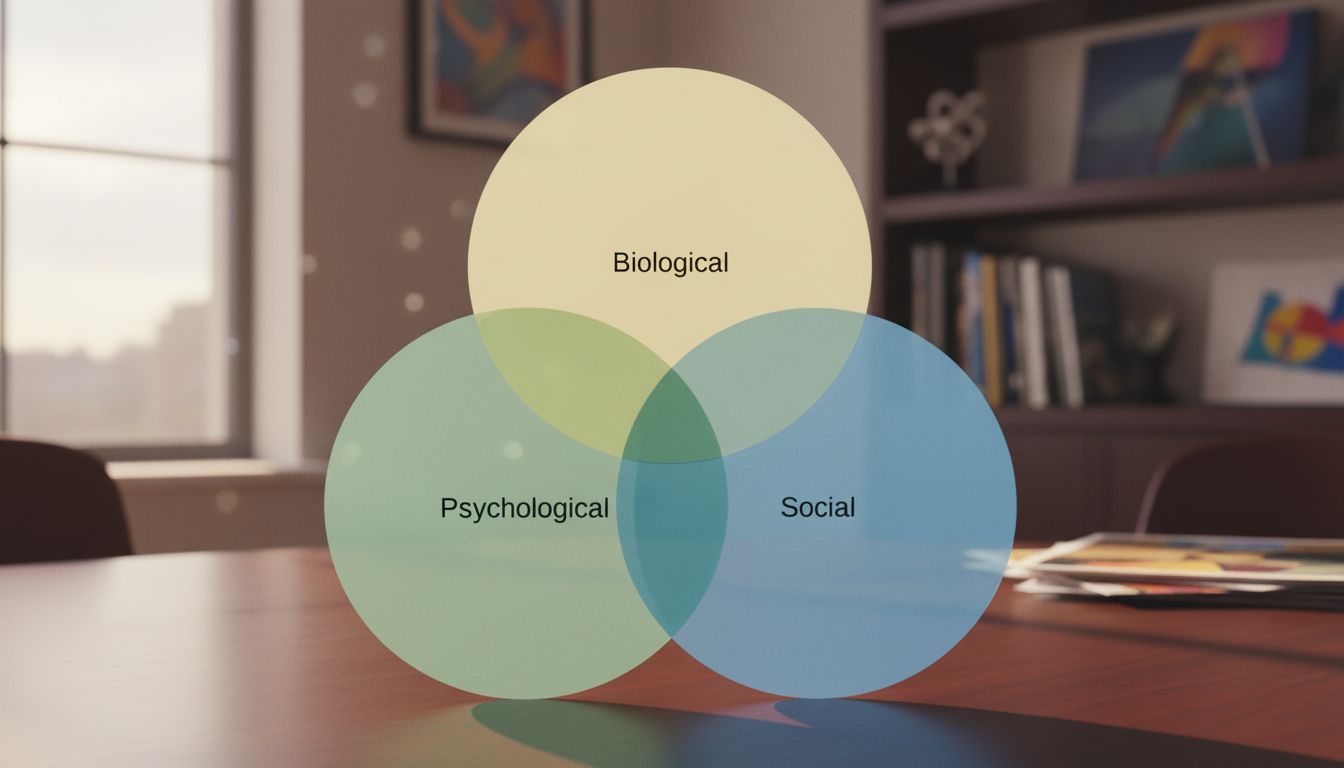
A key feature of contemporary psychology is its integration of multiple levels of analysis. A psychologist studying depression, for example, might look at genetic risk factors, thought patterns, social relationships, and cultural attitudes all at once. This multi-level approach is what separates current practice from the single-framework theories of the past.
The field also places a strong emphasis on cultural competence. Researchers now recognize that psychological findings from one population may not apply universally. Cross-cultural studies have reshaped how professionals understand everything from emotional expression to parenting styles.
How Perspective Psychology Shapes Understanding
A perspective psychology uses acts as a filter. It tells researchers which variables to measure, which questions to ask, and which explanations to accept. For example, a psychologist working from a behavioral perspective will focus on external stimuli and responses. A psychologist working from a cognitive perspective will prioritize internal thought patterns.
Choosing a perspective is not arbitrary. It reflects both the question being asked and the available evidence. Clinical psychologists often use an eclectic approach — drawing from cognitive-behavioral, humanistic, and psychodynamic frameworks depending on the client’s needs. Researchers tend to stay closer to one perspective to maintain methodological consistency.
Understanding which perspective informs a given study or treatment helps you evaluate its findings critically. When you read a psychological claim, ask: What assumptions does this perspective make? What does it leave out? That habit of questioning improves how you interpret psychological information in daily life.