Present Past and Future Tense: A Practical Guide for Clear Writing
Understanding present past and future tense is the foundation of clear English writing. Each tense tells your reader when something happens, happened, or will happen. Mixing them up — or using them inconsistently — creates confusion. The relationship between past future present ordering matters in both grammar and storytelling.
If you’ve ever wondered how to keep present past future straight, or struggled to apply past present and future tense correctly across different sentence types, this guide gives you a practical framework. You’ll also learn how the past future tense works — a form that trips up even experienced writers.
How Present Past and Future Tense Work Together in English
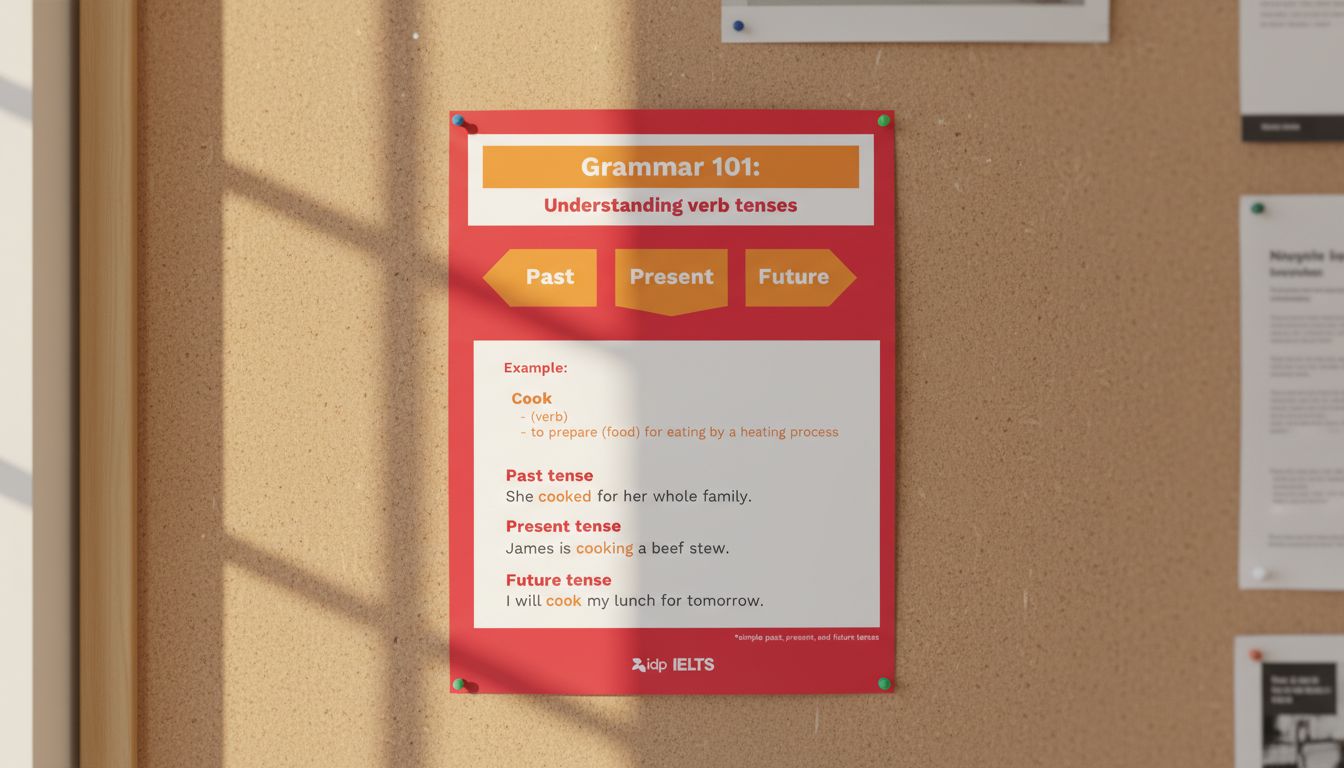
The present tense describes what is happening now or what is generally true. “She runs every morning.” The past tense describes completed actions. “She ran five miles yesterday.” The future tense describes what will happen. “She will run a half-marathon next month.” These three core forms handle most everyday writing.
But English tense is more complex than just three options. Each of the present past future categories has simple, progressive, and perfect forms. Present simple describes habits. Present progressive describes ongoing actions. Present perfect connects past actions to the present moment. Mastering these sub-forms requires seeing them as tools, each suited to a different job.
The past present and future tense system works together in narrative writing to control pacing and reader experience. When you shift from past to present tense mid-story without purpose, readers lose their sense of time. When you shift deliberately — using present tense for immediacy, past for reflection — you control the reading experience intentionally.
The past future tense deserves its own attention. It describes something that was going to happen from the perspective of a past moment. “She knew she would win.” The helping verb “would” combined with a base verb creates this form. It appears often in reported speech and in narratives recounting predictions or intentions from an earlier time.
Writers confuse the past future tense most often when reporting what someone said. “He said he will go” shifts tense incorrectly in formal writing. The correct form is “He said he would go.” The past future tense aligns the reported speech with the speaker’s original time perspective, which was the past.
Consistency is the key principle governing present past and future tense usage. Pick a tense for your main narrative and stay in it unless you have a specific reason to shift. Academic writing typically uses present tense for discussing literature and past tense for reporting research findings. Journalism uses past tense for completed events and present for ongoing situations.
When you write about fiction, use present tense. “Hamlet hesitates at the crucial moment.” When you write about history, use past tense. “Lincoln signed the Emancipation Proclamation in 1863.” These conventions aren’t arbitrary. They reflect the difference between timeless fictional events and completed historical ones.
The past future present relationship also matters in conditional sentences. “If she studies, she will pass” uses present in the condition and future in the result. “If she had studied, she would have passed” uses past perfect in the condition and past future in the result. Mixing these structures produces grammatically broken sentences that undermine your credibility as a writer.
Pro tips recap: Match your tenses within each sentence and paragraph. Use present tense for timeless truths and ongoing states. Use past tense for completed events. Use the past future tense when reporting past plans or predictions. When in doubt, read your sentence aloud — tense errors are often easier to hear than to spot visually.