Future Tense Spanish Conjugation: Endings, Charts, and Practice
Future tense spanish conjugation is one of the more learner-friendly aspects of the language because the regular pattern is consistent and the irregular verbs are few. The future endings spanish students need to memorize are the same for all three verb groups (-ar, -er, -ir), which makes the initial learning faster. Using a spanish future tense practice routine with real sentences helps the pattern stick. A spanish future tense chart posted at your workspace gives you a visual reference during that critical early phase. And dedicated future tense practice spanish learners do every day, even for just five minutes, builds fluency faster than occasional long study sessions.
Future Endings Spanish: The Complete Pattern
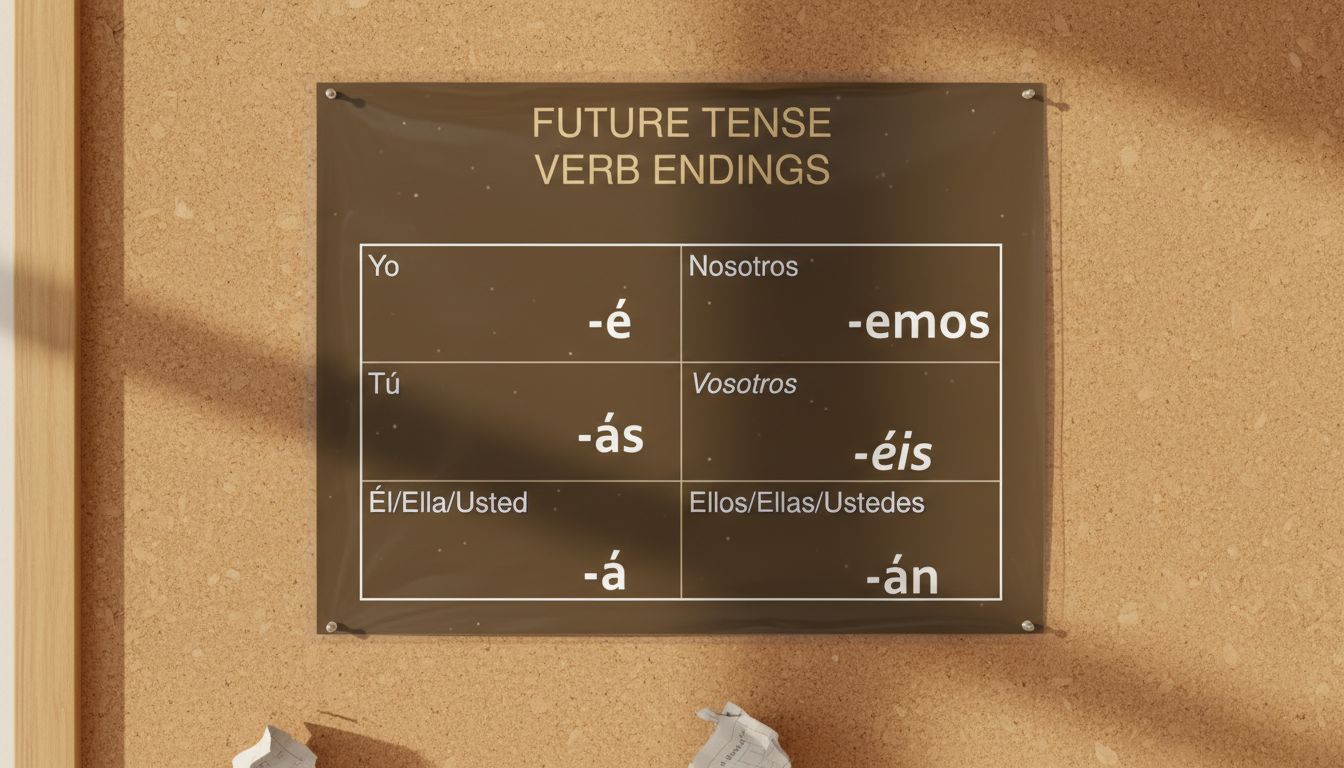
The future endings spanish attaches to the infinitive form of the verb for all regular verbs. There is no stem change for regular verbs in the future tense. The six future endings are:
- yo: -é
- tú: -ás
- él/ella/usted: -á
- nosotros: -emos
- vosotros: -éis
- ellos/ellas/ustedes: -án
These future endings spanish learners add directly to the infinitive: hablar becomes hablaré, hablarás, hablará, hablaremos, hablaréis, hablarán. The same endings apply to comer (comeré…) and vivir (viviré…). This consistency is what makes future tense spanish conjugation relatively easy for regular verbs.
The accent marks on -é, -ás, -á, -éis, -án are required in writing. Missing them is a grammatical error. The nosotros form -emos is the only one without an accent mark.
Spanish Future Tense Chart for Common Verbs
A spanish future tense chart for the most common regular verbs helps you see the pattern across multiple examples at once:
- hablar (to speak): hablaré / hablarás / hablará / hablaremos / hablaréis / hablarán
- comer (to eat): comeré / comerás / comerá / comeremos / comeréis / comerán
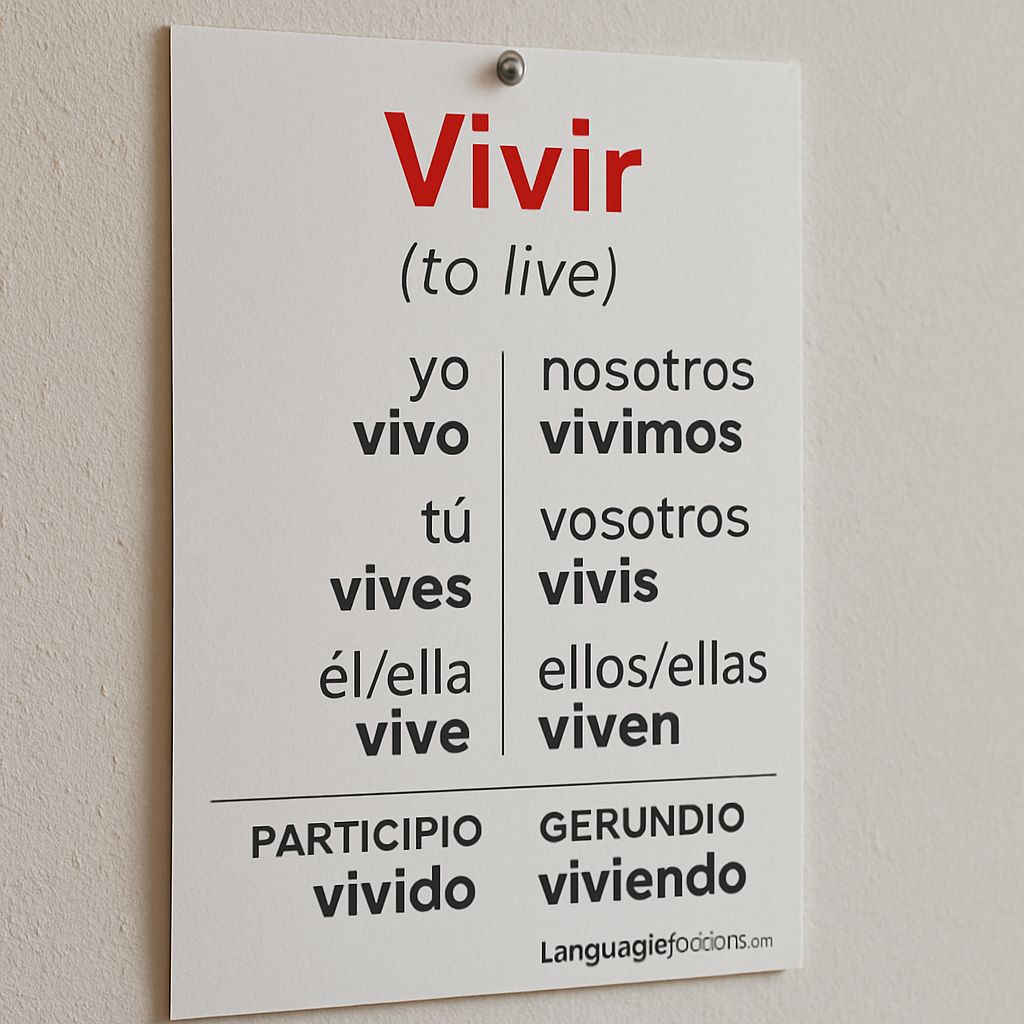
- vivir (to live): viviré / vivirás / vivirá / viviremos / viviréis / vivirán
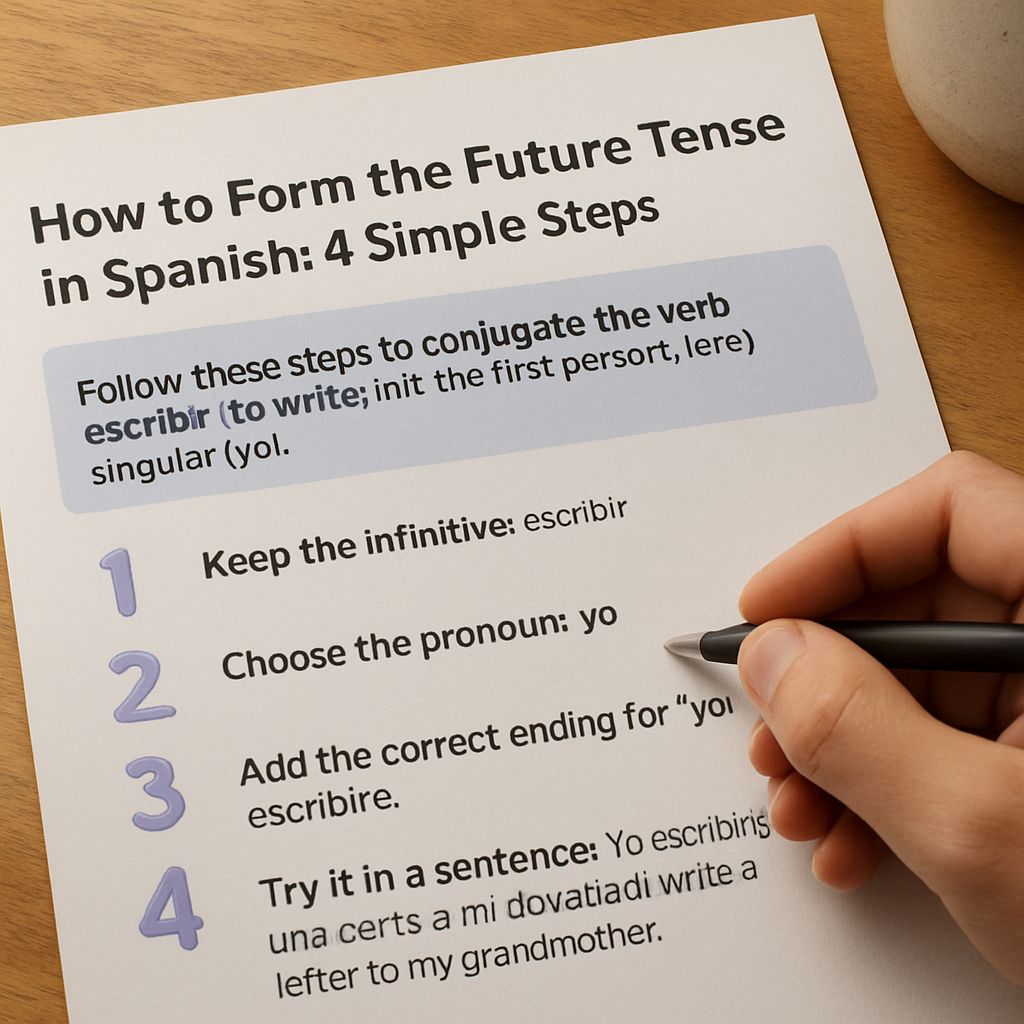
- escribir (to write): escribiré / escribirás / escribirá / escribiremos / escribiréis / escribirán
Print this spanish future tense chart and keep it at your study space. Seeing the parallel columns reinforces how consistent the pattern is.
Irregular Stems in Future Tense Spanish Conjugation
Future tense spanish conjugation for irregular verbs uses a modified stem instead of the full infinitive, but the same endings apply. The most important irregular stems:
- tener → tendr- (tendré, tendrás…)
- venir → vendr- (vendré, vendrás…)
- poder → podr- (podré, podrás…)
- saber → sabr- (sabré, sabrás…)
- hacer → har- (haré, harás…)
- decir → dir- (diré, dirás…)
- querer → querr- (querré, querrás…)
- salir → saldr- (saldré, saldrás…)
The future endings spanish stays the same for all of these. Only the stem changes. Memorize the eight irregular stems and you have covered the most frequent verbs.
Future Tense Practice Spanish: Effective Methods
Spanish future tense practice works best when it moves quickly from mechanical drilling to meaningful sentences. Start by conjugating five regular verbs through all six forms. Then write three sentences about your own future plans using different persons: what you will do tomorrow, what your friend will do, what your family will do.
Future tense practice spanish in context is more durable than isolated conjugation drills. Try keeping a short “future journal” for one week: each morning write two to three sentences in Spanish about your plans for the day. That daily future tense spanish conjugation practice in a real context builds fluency quickly.
Use a spanish future tense chart to self-check. After writing your sentences, verify that you used the correct future endings spanish for each subject. Catching your own errors builds self-monitoring skills that serve you well in conversation.
Reading native Spanish content that uses the future tense, such as weather forecasts, news predictions, or sports previews, gives you input that supports the output practice you are doing. Both sides of the skill develop together when you work them in parallel.