Decir Future Tense: Conjugation, Querer, Saber, and More
Mastering the decir future tense is an important milestone for any Spanish learner. Decir means “to say” or “to tell,” and it is one of the irregular verbs you need to know well. The querer future tense follows a similar irregular pattern, making querer and decir natural to study together. The saber future tense is another high-frequency irregular verb you will encounter constantly in reading and conversation. Knowing decir in future tense means understanding stem changes, not just ending changes. And for learners interested in other languages, the japanese future tense works on completely different principles, which makes for an interesting comparison.
Decir Future Tense: The Irregular Stem
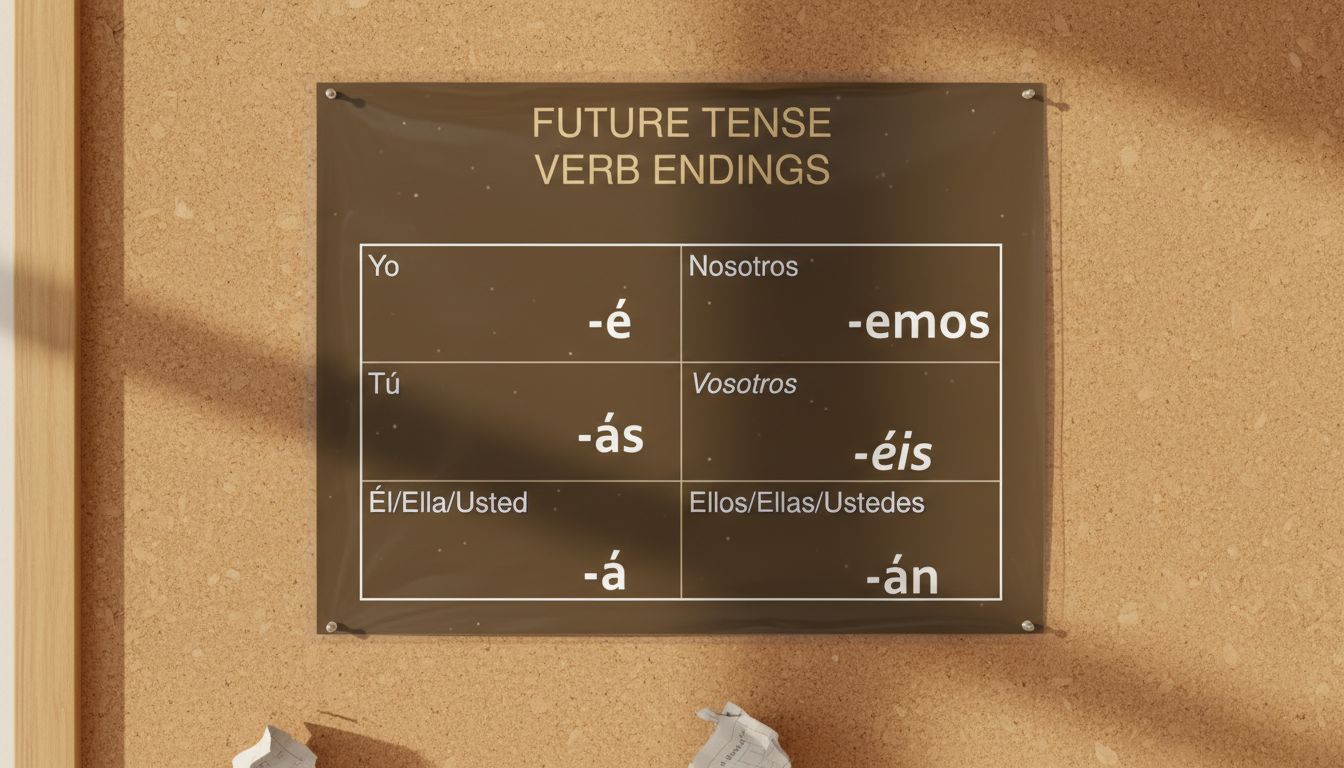
Unlike regular -ar, -er, and -ir verbs, decir does not use its infinitive as the future stem. The decir future tense uses the irregular stem dir-. You then add the standard future endings:
- yo – diré (I will say)
- tú – dirás (you will say)
- él/ella/usted – dirá (he/she/you will say)
- nosotros – diremos (we will say)
- vosotros – diréis (you all will say)
- ellos/ellas/ustedes – dirán (they/you all will say)
Decir in future tense appears in sentences like ¿Qué dirá ella? (What will she say?) or Te diré la verdad mañana. (I will tell you the truth tomorrow.) The stem change from “dec-” to “dir-” is the only irregular part. Once you learn it, the endings are the same as every other future tense verb.
Practice Sentences for Decir in Future Tense
Try these sentences to lock in the decir future tense forms:
- Él dirá lo que piensa. (He will say what he thinks.)
- Nosotros diremos la verdad. (We will tell the truth.)
- ¿Qué dirán los expertos? (What will the experts say?)
Querer Future Tense and Saber Future Tense
The querer future tense also uses an irregular stem: querr-. So “querer” becomes “querr” in the future, then takes the standard endings: querré, querrás, querrá, querremos, querréis, querrán. This double-r stem is a feature shared by several irregular Spanish future verbs.
The querer future tense is used to talk about wanting or wishing in the future: Querrá viajar el próximo año. (She will want to travel next year.) In hypotheticals and polite requests, querer future tense also appears: ¿Querrás ayudarme? can mean “Would you be willing to help me?”
The saber future tense uses the stem sabr-. The full conjugation runs: sabré, sabrás, sabrá, sabremos, sabréis, sabrán. Saber means “to know” in the sense of knowing facts or how to do something. Sabrá la respuesta mañana. (He will know the answer tomorrow.) ¿Sabrás conducir para entonces? (Will you know how to drive by then?)
Grouping decir future tense, querer future tense, and saber future tense together when you study makes sense because all three require learning new stems rather than just attaching endings to the infinitive. Drilling them as a set reduces the cognitive load compared to learning each one in isolation.
Japanese Future Tense: A Different System Entirely
For context, the japanese future tense is worth briefly examining because it shows how differently languages can handle time. Japanese does not have a dedicated future tense in the way Spanish or English does. Instead, Japanese uses the present tense form (called the non-past form) to express both present and future meaning. Context and time markers like ashita (tomorrow) or rainen (next year) clarify when the action will happen.
For example, Taberu (食べる) means “I eat” or “I will eat” depending on context. The japanese future tense uses markers and context rather than verb conjugation to signal futurity. This is very different from Spanish, where the decir future tense and other future forms have distinct endings and stems that make the time reference explicit.
Understanding this contrast helps Spanish learners appreciate why Spanish future tense forms are worth learning precisely: they do the work of signaling time without relying on context. The decir in future tense forms leave no ambiguity about when the saying will happen.
Key takeaways: The decir future tense uses the irregular stem dir-, querer future tense uses querr-, and saber future tense uses sabr-. Memorize these three stems and you have a solid foundation. The japanese future tense contrast shows why Spanish future conjugation matters: it encodes time unambiguously in the verb form itself.