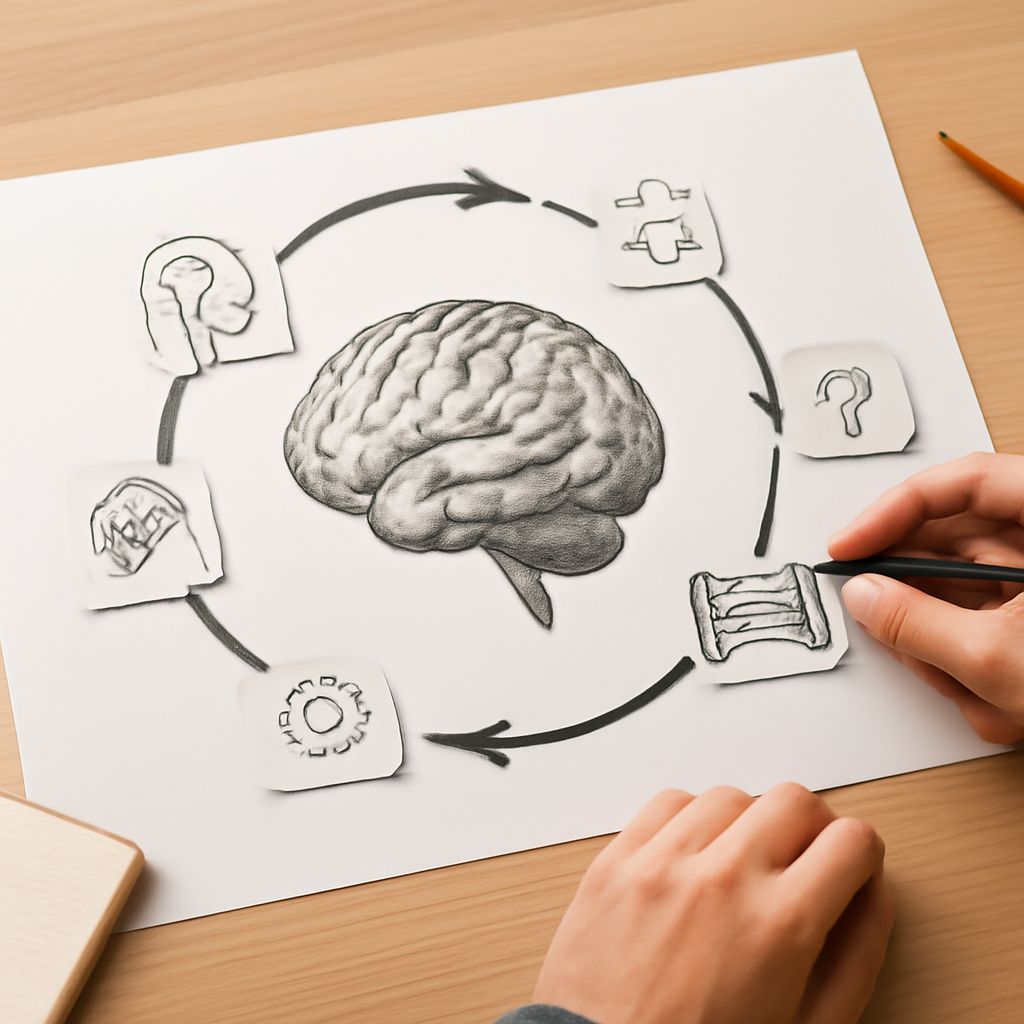
Basic Research Psychology: Building the Foundation of Behavioral Science
Basic research psychology is the engine that drives our understanding of the human mind. Unlike applied research — which solves specific real-world problems — basic research asks fundamental questions about how the mind works, often without an immediate practical goal. This distinction matters because many of psychology’s most transformative applied tools were born from basic research conducted decades earlier. Trust issues psychology is one area where this pathway is especially clear: understanding why people struggle to trust others begins with foundational research into attachment, threat perception, and social cognition. Basic trust psychology — the earliest developmental sense of safety and predictability — provides the conceptual bedrock. The precise basic trust definition psychology offers traces back to Erik Erikson’s theory of psychosocial development. Even more surprising, research into pheromones definition psychology suggests that chemosensory signals may influence trust and social bonding in ways that bypass conscious awareness entirely.
This article surveys these interconnected concepts, showing how foundational psychological science opens windows onto some of the most personally relevant questions we face.
What Is Basic Research Psychology and Why It Matters
Basic research psychology pursues knowledge for its own sake. Researchers study memory, perception, language, emotion, and social cognition not because there is an immediate application but because these processes are fundamental to what it means to be human. Over time, this knowledge base enables everything from educational interventions to psychiatric medications to courtroom evidence standards.
The history of psychology is littered with basic findings that seemed academic at the time and became transformative later. Ivan Pavlov’s work on conditioned reflexes was basic research in the purest sense. It gave rise to behavioral therapy, systematic desensitization, and our understanding of addiction and fear responses. The payoff came decades after the original discovery.
This is the essential argument for basic research: you cannot always know in advance which discoveries will matter most. Investing in fundamental knowledge creates the intellectual capital from which applied solutions are later drawn.
Trust issues psychology is a domain that illustrates this clearly. Clinicians working with clients who have difficulty trusting others — often due to early neglect, betrayal trauma, or relational abuse — draw on decades of basic research into attachment neuroscience, threat appraisal systems, and interpersonal prediction error. Without those foundational studies, therapeutic approaches would lack the theoretical grounding they need to be reliably effective.
Trust itself is a complex psychological state. It involves both cognitive assessment (is this person likely to be reliable?) and emotional vulnerability (am I willing to be harmed if I am wrong?). Trust issues psychology explores what happens when this system becomes chronically dysregulated — when the default setting shifts from tentative openness to vigilant defensiveness, regardless of actual threat level.
The origins of this dysregulation are often found in early childhood. Basic trust psychology is specifically concerned with the first stage of Erikson’s psychosocial model: the conflict between trust and mistrust that plays out during infancy. Infants who receive consistent, responsive caregiving develop a generalized expectation that the world is safe and people can be relied upon. Those who experience inconsistency or neglect may develop a global wariness that persists into adult relationships.
The precise basic trust definition psychology uses is this: a fundamental confidence in the reliability, goodness, and continuity of the world and significant others, established in the first year of life through caregiver responsiveness. This concept, though originating in developmental theory, connects directly to research on adult relationship functioning, therapeutic alliance, and even organizational behavior. The basic trust definition psychology provides is both developmental and relational — it captures something that begins in infancy but continues to operate throughout the lifespan.
Adults with low basic trust may struggle in therapy because the therapeutic relationship itself requires exactly the kind of trusting vulnerability that their early experience taught them was dangerous. Skilled therapists recognize this and work explicitly on the relational dynamic before attempting content-level interventions.
An unexpected contributor to our understanding of trust comes from research into pheromones definition psychology. Pheromones are chemical signals produced by organisms that influence the behavior or physiology of other members of the same species. The pheromones definition psychology framework suggests that humans may exchange social information through chemosensory channels that bypass conscious awareness.
Studies show that people exposed to sweat samples from individuals experiencing fear or disgust rate ambiguous social stimuli more negatively — even when they cannot consciously detect the scent. Other research suggests that hormonal status, genetic compatibility, and social bonding signals are partially communicated through olfactory cues. While the human pheromone literature is more contested than in other animals, the basic mechanisms of chemosensory social signaling appear to be real and functionally relevant.
This connects to trust in an unexpected way: some researchers propose that pheromonal signals function as rapid pre-conscious threat or safety assessments, contributing to the gut-level sense of whether a person “feels safe” before any explicit reasoning has occurred. If so, then basic research psychology into pheromones may eventually illuminate why some first impressions are so powerful and so resistant to rational revision.
The connecting thread across basic research psychology, trust issues psychology, basic trust psychology, and pheromones definition psychology is this: understanding human behavior at the deepest level requires multiple lenses — developmental, clinical, neurobiological, and even chemosensory. No single framework tells the whole story, and basic research keeps expanding the available tools.