Shaolin Philosophy and Eastern vs Western Philosophy: A Complete Comparison
Shaolin philosophy represents one of the world’s most distinctive and disciplined intellectual traditions — a synthesis of Buddhist doctrine, Daoist naturalism, and Chan (Zen) meditation embedded within a physical training culture that uses the body as a vehicle for spiritual development. Comparing eastern vs western philosophy reveals fundamentally different approaches to the most basic philosophical questions: what is real, how do we know it, and how should we live. The contrast between western philosophy vs eastern philosophy is not simply a geographic distinction — it reflects divergent assumptions about the nature of the self, the relationship between reason and experience, and the purpose of philosophical inquiry itself. From the opposite direction, eastern philosophy vs western philosophy differences illuminate what each tradition takes for granted and what each challenges. And the ongoing dialogue between western vs eastern philosophy is one of the most intellectually rich conversations in contemporary global culture — producing hybrid frameworks that neither tradition alone could generate.
This article examines Shaolin philosophy in depth, surveys the major comparative dimensions between Eastern and Western traditions, and considers what genuine philosophical dialogue between them produces.
Shaolin Philosophy: Body, Mind, and the Path of Practice
How Chan Buddhism Shaped the Warrior Tradition
Shaolin philosophy emerges from the Shaolin Monastery, founded in Henan Province, China, in 495 CE. The monastery became associated with martial arts through a synthesis that occurred centuries after its founding: Chan Buddhist monks developed physical training practices that supported long meditation sessions, promoted health, and eventually evolved into sophisticated combat systems. The philosophy is inseparable from the practice.
The core of shaolin philosophy is the integration of Chan (Zen) Buddhism with physical discipline. Chan Buddhism emphasizes direct experience over doctrinal study — the practitioner seeks to cut through conceptual overlay to apprehend reality directly. Physical training serves this goal: the demands of intense martial arts practice break down habitual mental patterns, create conditions of present-moment awareness, and develop the equanimity needed for genuine meditation.
The five animals of Shaolin — tiger, crane, leopard, snake, and dragon — represent not just fighting styles but philosophical archetypes. Tiger embodies strength and directness. Crane embodies precision and balance. Leopard embodies speed and agility. Snake embodies sensitivity and yielding. Dragon embodies spirit, unpredictability, and the integration of all other qualities. Shaolin philosophy sees the cultivation of these qualities as both physical and moral development.
Eastern vs Western Philosophy: Core Differences
Different Questions, Different Methods, Different Goals
The most fundamental difference in eastern vs western philosophy comparisons is the role of the self. Western philosophy, particularly in its modern Cartesian form, begins with the individual self as the epistemological starting point — “I think, therefore I am.” The self is assumed to be real, bounded, and foundational. Most Eastern philosophical traditions — Hindu Advaita, Buddhist anatta (no-self), Daoist dissolution of the separate self — challenge this assumption at the root.
In western philosophy vs eastern philosophy comparisons, the Western tradition shows a strong preference for propositional knowledge — knowledge that can be stated in sentences and evaluated as true or false. Logic, argumentation, and systematic theory-building are central methods. Eastern traditions place more weight on what Wittgenstein called “knowledge how” — practical, embodied wisdom that cannot be fully captured in propositions. This is why meditation, contemplative practice, and physical training are philosophical methods in Asian traditions in ways they generally are not in Western academic philosophy.
The relationship to language itself differs. Western analytic philosophy has often treated language as a tool for precise thought. Many Eastern traditions — Daoism, Zen, Advaita Vedanta — are deeply suspicious of language, regarding it as a source of conceptual confusion that obscures direct experience. “The Dao that can be spoken is not the eternal Dao” (Laozi) states this position with characteristic economy.
In eastern philosophy vs western philosophy discourse, the question of ethics reveals another divergence. Western ethics tends toward universal principles: Kant’s categorical imperative, utilitarian calculation, natural rights. Eastern ethical traditions tend toward relational and contextual frameworks: Confucian role ethics (the duties arising from specific relationships — parent, child, ruler, minister), Buddhist compassion arising from recognition of shared suffering, Daoist virtue (de) as alignment with the natural order rather than compliance with rules.
Western vs eastern philosophy comparative work has produced important corrective insights in both directions. Western philosophy has been enriched by Eastern epistemological humility about the limits of conceptual thought, by contemplative practices that ground philosophical inquiry in direct experience, and by relational ethics that challenge hyper-individualism. Eastern philosophy has benefited from Western demands for logical rigor, its institutions for open public debate, and its tools for systematic critique of traditional authority.
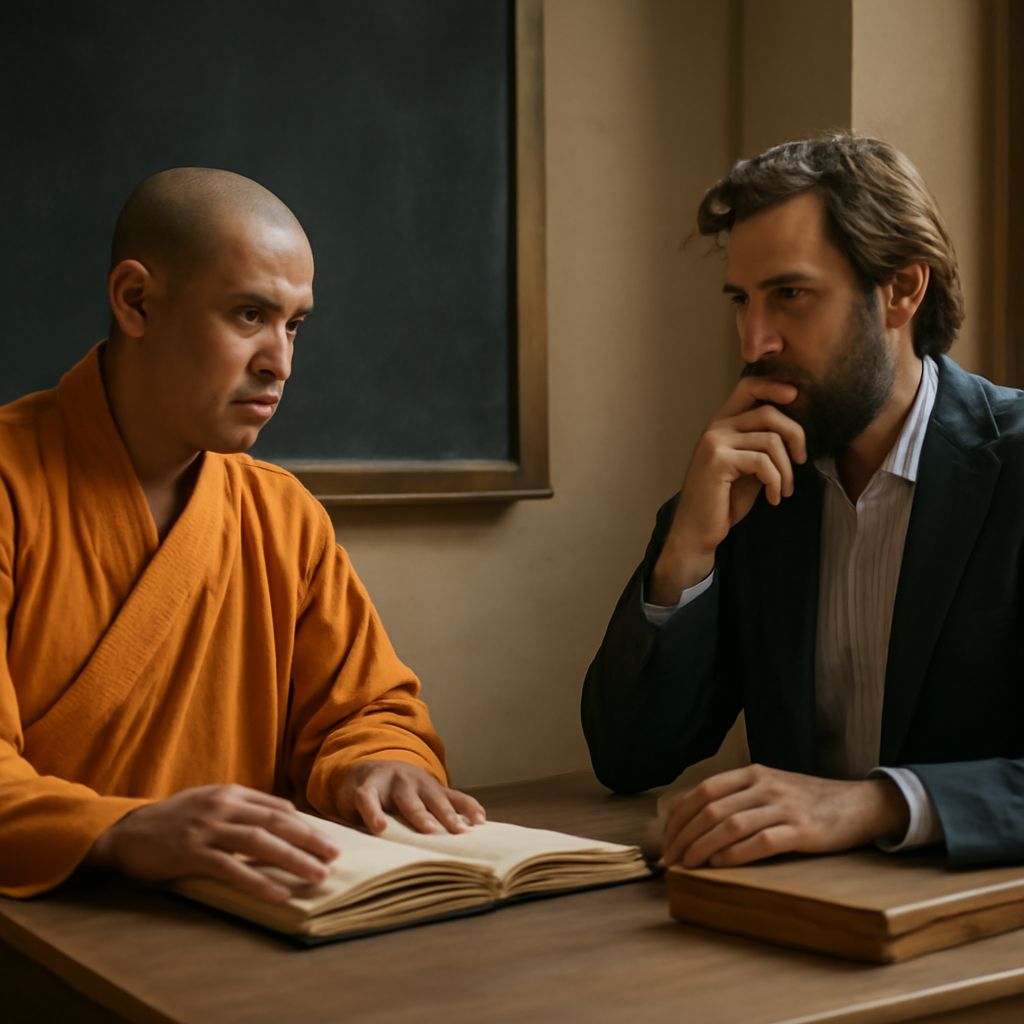
The dialogue between traditions is most productive when neither side assumes it already possesses the complete truth and merely needs to translate for the other. Genuine philosophical encounter requires the willingness to have one’s foundational assumptions challenged — which is exactly what both shaolin philosophy and the best of Western philosophical inquiry demand of their practitioners.