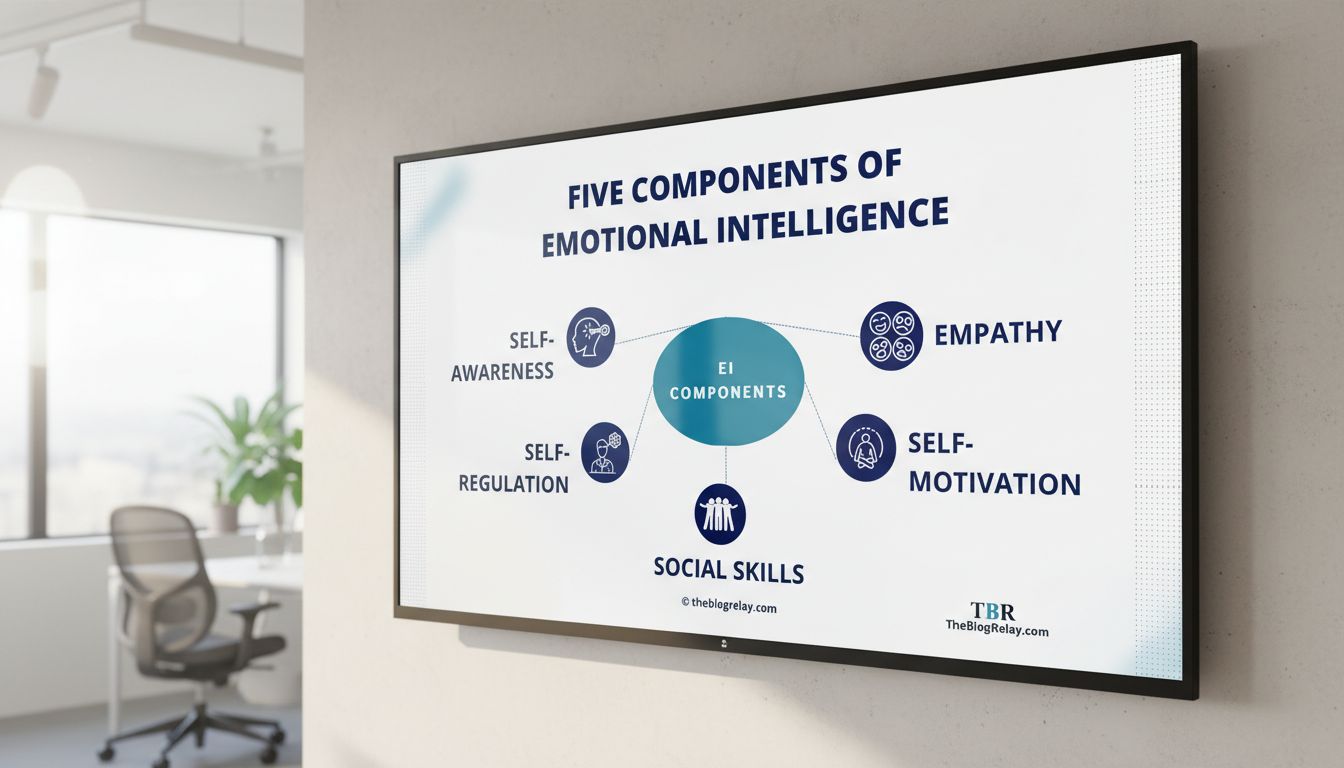
The 5 components of emotional intelligence — self-awareness, self-regulation, motivation, empathy, and social skills — form the framework introduced by psychologist Daniel Goleman in his landmark 1995 book. Social and emotional intelligence together determine how well a person navigates relationships, manages stress, and communicates under pressure. Emotional and social intelligence are not fixed traits; they can be developed with practice and intentional reflection. One component of emotional intelligence involves the ability to recognize and name your own emotions accurately — a skill that sounds simple but requires real effort to build. Emotional intelligence is a critical component of leadership effectiveness, parenting, teaching, and any role that involves sustained interaction with other people.
This article breaks down each of the five components and explains how they work in practice.
Breaking Down the 5 Components of Emotional Intelligence
Self-awareness is the foundation. It means knowing what you are feeling and why, and understanding how your emotions affect your behavior and the people around you. One component of emotional intelligence involves this accurate self-perception — people with high self-awareness can name their emotional states precisely rather than just saying “I feel bad.” This precision matters because different emotions call for different responses.
Self-regulation follows from awareness. It means managing your emotional responses rather than being driven by them. Social and emotional intelligence at this level looks like pausing before reacting, staying calm under pressure, and recovering from setbacks without excessive rumination. This is not suppression — it is the ability to choose your response rather than having your initial impulse choose for you.
Motivation, in the emotional intelligence framework, refers to intrinsic drive rather than external reward. People with high emotional and social intelligence are motivated by mastery, purpose, and personal standards rather than just salary or status. This component predicts persistence in the face of difficulty and explains why some people keep working toward goals that others abandon.
Empathy is the ability to understand and share the feelings of others. It is not the same as sympathy — empathy means genuinely understanding another person’s perspective, not just feeling sorry for them. Emotional intelligence is a critical component of empathic leadership: managers who understand what their team members feel can communicate more effectively, reduce conflict, and retain talent.
Social skills are the fifth and most outward-facing of the 5 components of emotional intelligence. They include communication, conflict resolution, persuasion, and the ability to build and maintain relationships. Social skills are the place where emotional and social intelligence becomes visible to others. Without the first four components in place, however, social skills become manipulation rather than genuine connection.
Why Social and Emotional Intelligence Matter at Work
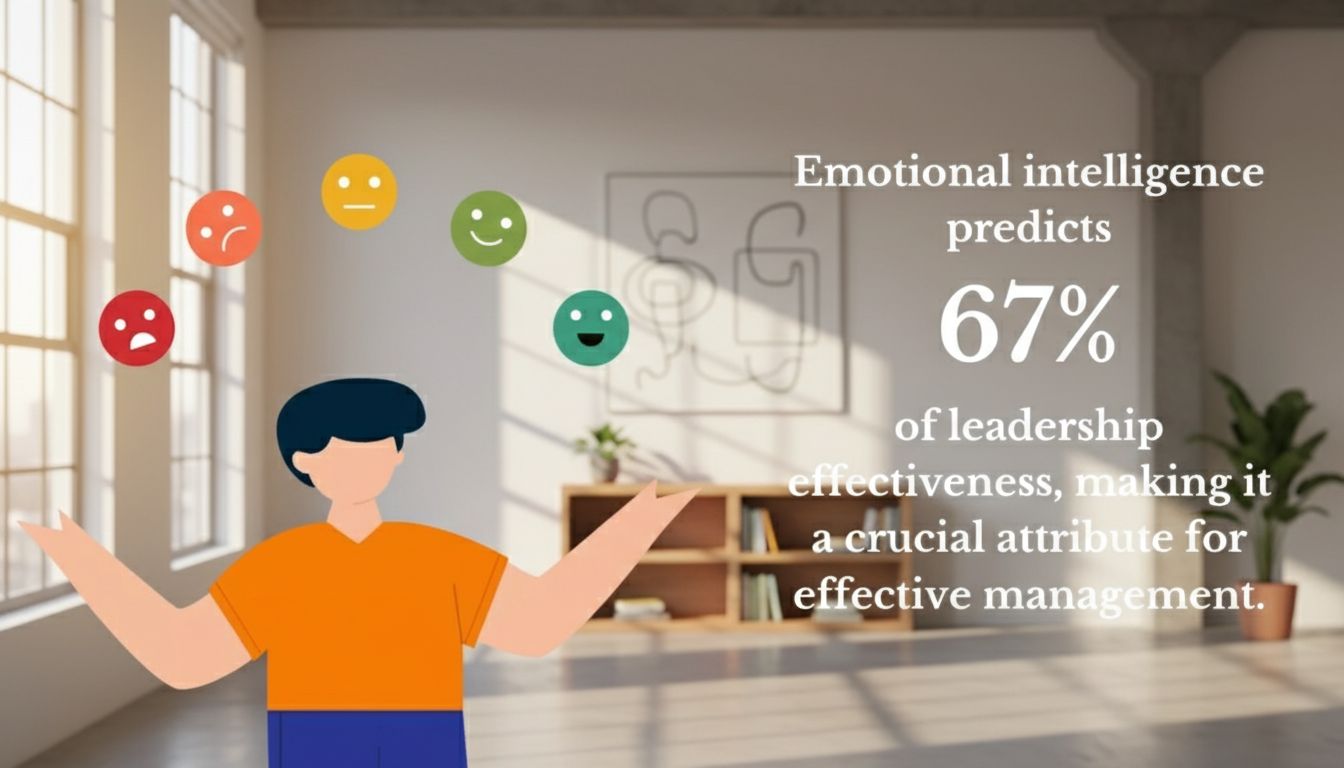
Research consistently shows that social and emotional intelligence predict career success better than IQ for most professional roles. In a 1994 meta-analysis, emotional competencies accounted for 67% of the abilities required to be effective in leadership. Emotional intelligence is a critical component of high-performing teams, where trust, communication, and conflict resolution drive results.
One component of emotional intelligence involves reading a room — understanding the emotional climate of a group before speaking or acting. This skill becomes especially important in cross-cultural teams, negotiations, and any context where the emotional subtext matters as much as the explicit content. Leaders who lack this competency regularly make avoidable missteps.
Developing the 5 components of emotional intelligence at an organizational level requires more than training workshops. It requires creating psychological safety — conditions where people can acknowledge emotions, admit mistakes, and give honest feedback without fear. Emotional and social intelligence at scale is a culture, not a curriculum.
Building Your Emotional Intelligence
The 5 components of emotional intelligence are learnable. Research by Richard Boyatzis at Case Western shows that targeted coaching and deliberate practice produce lasting changes in emotional competency. The key is sustained effort over months, not intensive workshops that fade quickly.
Start with self-awareness — the first and most foundational of the 5 components. Keep a brief emotion log each evening: what you felt, what triggered it, and how you responded. Over weeks, patterns emerge. This is how emotional and social intelligence development actually works — through accumulated self-observation, not insight alone.
Social skills, the most visible of the components, improve with feedback and practice. Ask trusted colleagues or friends where they see your emotional intelligence breaking down. The answers are often uncomfortable but almost always useful. Emotional intelligence is a critical component of personal growth precisely because it cannot be developed in isolation — it requires relationship.