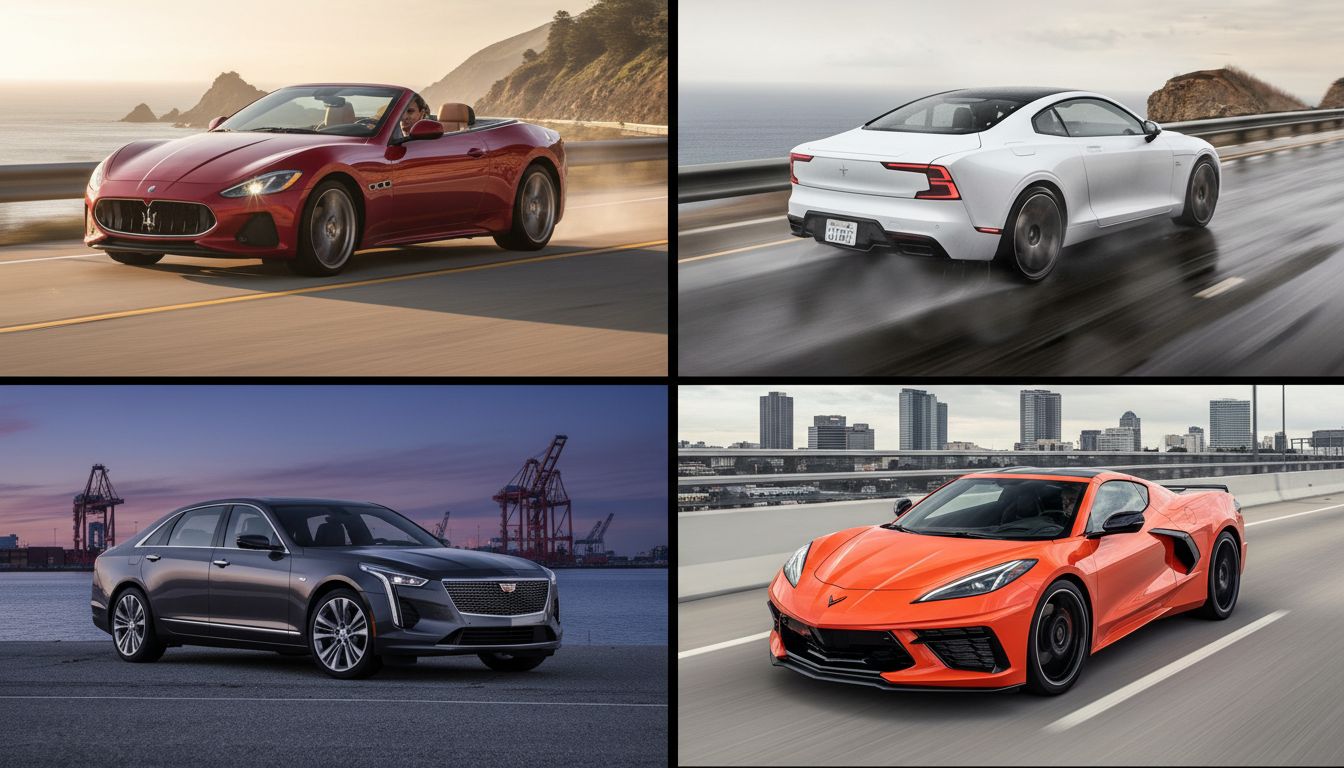
The question of what future cars 2050 will look like involves both engineering projections and cultural predictions. Future classic cars are the vehicles being manufactured today that enthusiasts and collectors believe will appreciate in value and cultural significance over the next two to three decades. The category of future classic is partly a stylistic judgment and partly a market prediction. Future classics across all eras share certain qualities: distinctiveness of design, limited production numbers, and association with a transitional moment in automotive culture. And future muscle cars face a particularly interesting challenge: how do you maintain the character of a genre defined by big naturally aspirated V8 engines in a regulatory and market environment moving decisively toward electrification?
This article examines each question with enough specificity to be useful for both enthusiasts and curious readers.
From Future Cars 2050 to Today’s Future Classics: What Will Last
Future cars 2050 will almost certainly be predominantly electric, at least in markets that currently have strong electrification policy frameworks. Beyond powertrain, the more interesting design question is autonomy. Full self-driving at SAE Level 4 and 5 removes the steering wheel and fundamentally restructures interior space. Future cars 2050 in this configuration look nothing like today’s vehicles: they are mobile rooms with seating arranged for conversation, work, or sleep rather than for driving.
This shift is already driving collector interest in traditionally driven vehicles. The perception that future cars 2050 will be largely autonomous is one of the forces pushing up prices for analog, manually operated vehicles right now. A manual-transmission sports car from the 2010s is increasingly seen as a future classic precisely because the driving experience it offers will become rarer.
Future classic cars are typically identified through a combination of factors. Limited production numbers reduce supply over time as attrition through accidents and neglect reduces the surviving fleet. Distinctive styling that stands out from period contemporaries tends to age well. Association with a significant technological or cultural moment helps: the original Toyota Prius, despite its utilitarian appearance, is increasingly discussed as a future classic because of its role in normalizing hybrid powertrains.
Future classic cars being manufactured today include the Porsche 911 GT3 Touring in manual transmission form, the Ford Mustang Shelby GT500 as the last high-output supercharged muscle car before the Mustang’s full electric transition, and the Dodge Challenger SRT Hellcat models from the final production years before Stellantis discontinued them. Each of these vehicles represents a last-of-kind position in its category.
The future classic designation is not just a collector’s game. It also describes which current vehicles will be culturally significant enough to shape the next generation of enthusiasts’ imaginations. The cars that dominate automotive magazines and online communities today are building the nostalgic associations that will make them future classics in twenty years.
Future classics from the electric era are an emerging conversation. The original Tesla Roadster (2008-2012) is already trading at multiples of its original MSRP as a future classic of the electric transition. The Rivian R1T first-edition vehicles are similarly positioned. These vehicles are future classics not because of V8 engines or exotic styling but because of their historical position as commercial-scale proof points for electric performance vehicles.
Future muscle cars represent a genuine identity challenge for the segment. Muscle cars, as a cultural category, are defined by large displacement engines, rear-wheel drive, and accessible price points. The electric equivalent, an affordable, fast, rear-wheel drive American car, is technically achievable: the Dodge Charger Daytona EV is the most prominent attempt. But the sound, the tactile experience of a naturally aspirated V8 rev, and the specific kind of performance character that comes from combustion physics are not replicable through electric motors.
This does not mean future muscle cars cannot exist. It means they will be a different kind of vehicle with different character. Whether enthusiasts adopt the electric muscle car identity with the same passion they brought to the combustion version is one of the more genuinely uncertain questions in automotive culture right now.