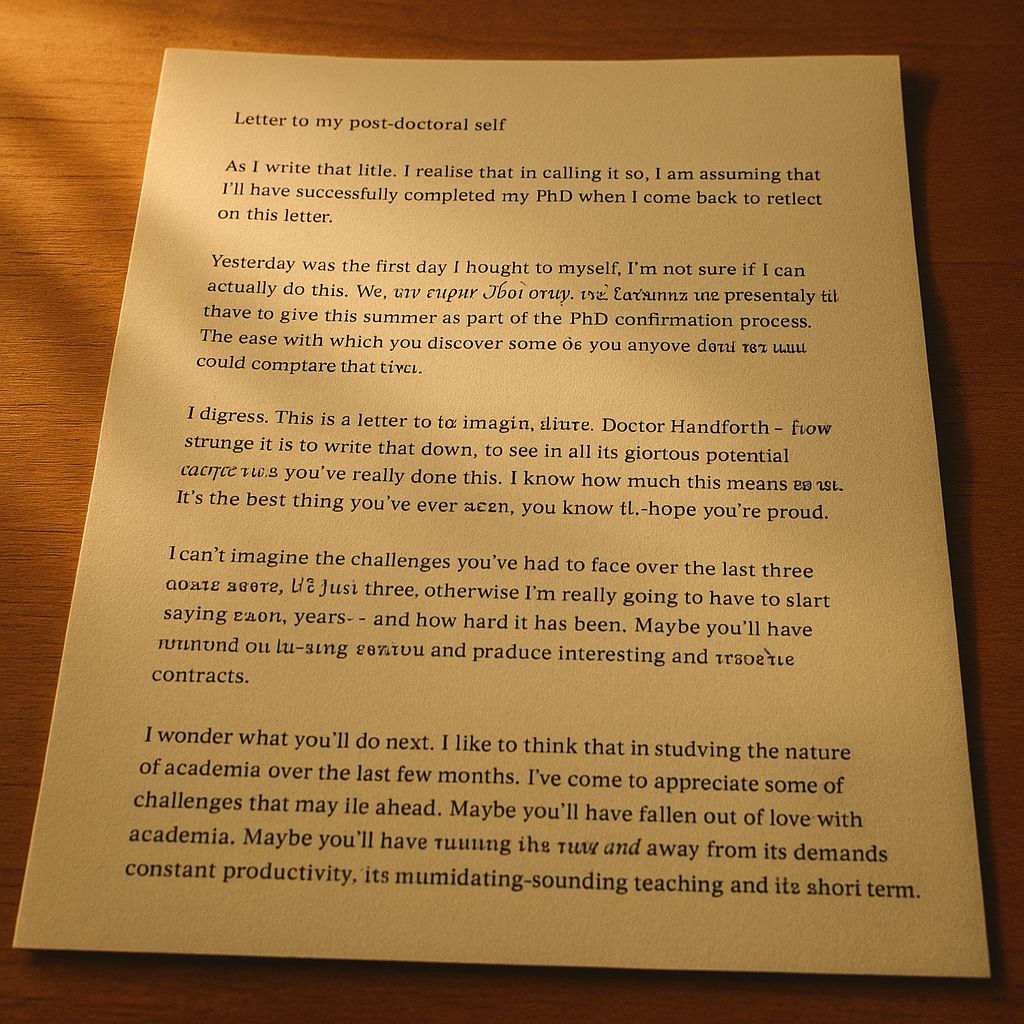
Learning how to write a letter to your future self is one of the most useful reflective exercises you can do. It captures where you are right now — your fears, your goals, your ordinary daily life — in a way that will feel surprisingly vivid years from now. A solid letter to future self template gives you structure so you don’t stare at a blank page.
You can also send an email to your future self using services like FutureMe, which delivers your message on a date you choose. Future self journaling takes this further, turning it into a regular practice rather than a one-time event. And if you’re heading to college, writing a letter to future roommate uses the same reflective skills in a more immediate and practical way.
Why Writing to Your Future Self Works
When you write to your future self, you create a time capsule of your current mindset. Researchers studying temporal self-appraisal — how we think about our past and future selves — find that people who treat their future selves as real, distinct people make better long-term decisions. The act of writing makes that future version of you more concrete.
You also build accountability without pressure. Unlike a goal list, a letter to your future self carries emotional context. You’re not just writing “lose weight” — you’re writing about why it matters, what’s standing in your way, and what you hope your life will look like. That emotional depth makes the letter far more useful when you read it later.
What Future Self Journaling Adds to the Practice
Future self journaling turns a one-time letter into a sustained practice. Instead of writing once, you write regularly — maybe weekly or monthly — about who you’re becoming and what actions you’re taking toward that version of yourself. Psychologists have found this type of journaling reduces anxiety and increases goal-directed behavior.
You don’t need elaborate prompts. Start with: What do I want my life to look like in one year? What am I doing today that supports that? What am I avoiding? The consistency of future self journaling builds a narrative thread you can follow over time, which letter-writing alone doesn’t provide.
How to Use a Letter to Future Self Template
A letter to future self template gives you categories to address so you cover more ground than you would freewriting. A solid template typically includes sections for: current life circumstances, biggest goals, fears and worries, relationships you value, and one specific hope for the future.
Here’s how to use a template effectively. Start with the facts — where you live, what you do for work or school, what your days look like. Then move to feelings — what’s stressing you out, what’s exciting you. End with questions for your future self: Did you follow through? What surprised you? What do you wish you’d done differently?
The template works because it prevents you from only writing about your best moments. Future self letters lose value when they’re purely aspirational. Include the mundane and the difficult. That’s what makes them feel honest and worth reading years later.
How to Send an Email to Your Future Self
The easiest way to send an email to your future self is through FutureMe.org. You write a message, choose a delivery date — one year, five years, ten years out — and the service emails it to you on that day. It’s free for standard delivery windows and has been running since 2002.
Other options include writing the email now and scheduling it using your email client’s delay-send feature, or asking a trusted friend to hold a sealed letter for a specific date. The method matters less than the commitment to actually read it when it arrives.
If you’re writing a letter to future roommate as an exercise in the same vein, the approach differs slightly — you’re introducing yourself to a stranger rather than writing to your future self. But the self-reflection skills transfer directly. You’ll think about how you want to be known, what you need in a shared space, and what kind of environment you want to create together.
Bottom line: Whether you use a template, a journaling practice, or an email service, the act of writing to your future self builds the habit of self-awareness. Start with one honest letter today, set a delivery date at least one year out, and give your future self something real to read.