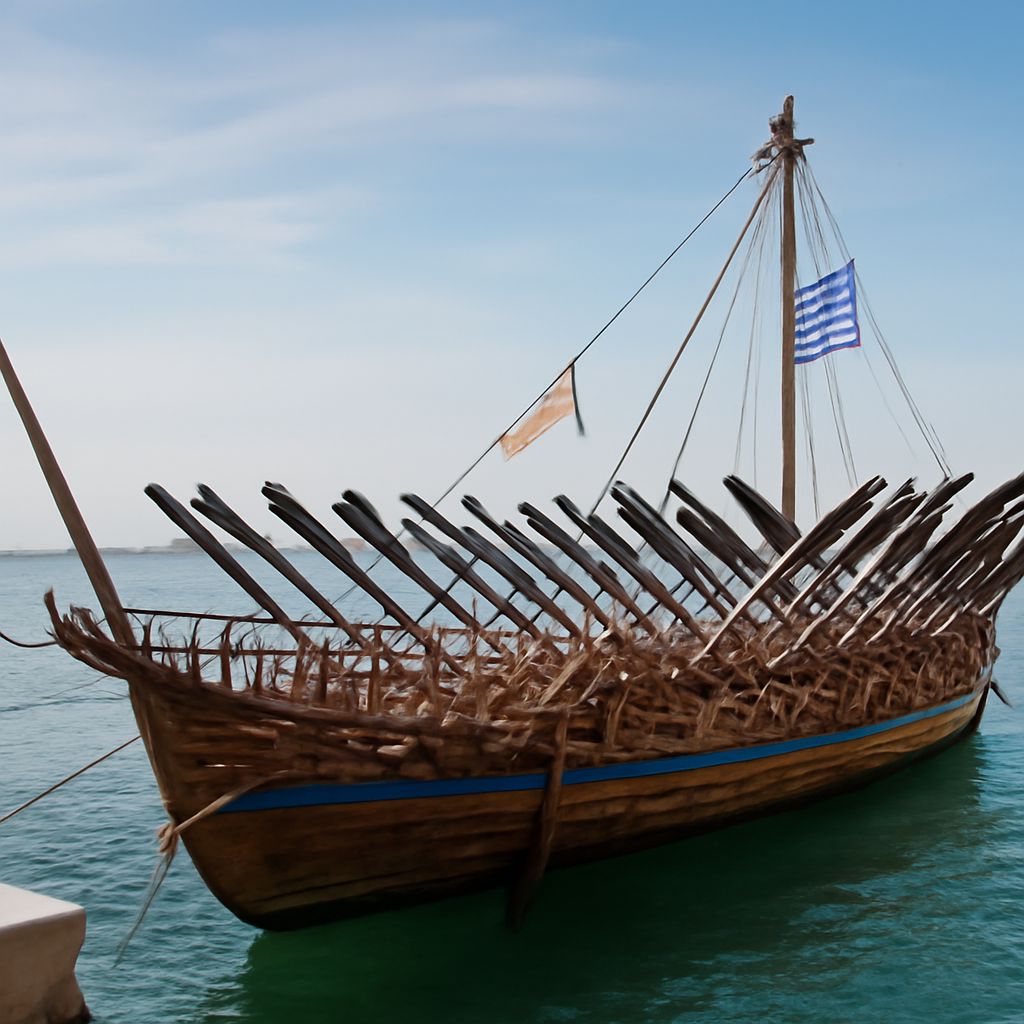
The ship of Theseus is a classic thought experiment in philosophy, often known as Theseus’s ship. It raises deep questions about the nature of identity, change, and what makes something the same over time. By examining this puzzle, philosophers invite us to consider whether an object that has had all its components replaced remains fundamentally the same thing.
This topic lies at the heart of metaphysics and challenges our intuition about persistence. Both “ship of Theseus” and “Theseus’s ship” are more than just historical curiosities—they remain highly relevant in debates about personal identity, objects, and even modern technology. Exploring this paradox helps us better understand ourselves and the world around us.
The Origins of Ship of Theseus
The story of the ship of Theseus dates back to ancient Greece. Plutarch, a Greek historian, first recorded the legend in his work “Life of Theseus.” According to the tale, the people of Athens preserved the ship sailed by the hero Theseus. As its wooden parts decayed, they were replaced one by one, until none of the original material remained. Yet, the Athenians continued to call it Theseus’s ship and displayed it as a monument.
This legend soon became a famous puzzle for philosophers. It was not only about a ship but about what it means for something to persist through change. The Greeks were fascinated by the idea that the ship, despite its new parts, was still regarded as the same vessel. Over time, the puzzle has inspired countless discussions and adaptations, from boats and statues to everyday objects.
Philosophers like Heraclitus and Plato would often discuss similar themes, focusing on the nature of change and permanence. The ship of Theseus stands as one of the earliest and clearest examples of these questions. Even today, the debate about Theseus’s ship is foundational in the study of identity and metaphysics.
As the centuries passed, thinkers in many cultures and eras have revisited the puzzle of the ship. It set the stage for later questions about what makes any object, person, or even a community remain “itself” through the passage of time and change.
Understanding the Paradox
The essence of the ship of Theseus problem is this: if every plank of Theseus’s ship is replaced, is it still the same ship? And if so, why? Some argue that the ship’s identity remains because its form, purpose, and history persist. Others say it is a different ship, since none of the original material is left.
Suppose we take this even further. If someone collected all the original planks as they were removed and reassembled them into a ship, which would be the real Theseus’s ship? Would it be the one with all new parts but a continuous history, or the one with the original materials but a broken story? This extension makes the paradox even more puzzling.
This problem gets to the heart of questions about identity over time. Is identity based on material continuity, or on something else like function, structure, or narrative? The ship of Theseus invites us to think carefully about how things can change yet still be recognized as the same. It also connects to the ways we think about ourselves and our own identity as we grow and change over life.
These challenges make the paradox a useful teaching tool in philosophy. It shows how our everyday understanding of sameness can become complicated when we look closely at objects and their history. The puzzle of Theseus’s ship continues to spark debate, both in classical philosophy and in modern thought experiments.
Philosophical Interpretations
Philosophers have developed several approaches to the ship of Theseus problem. One view, known as “perdurantism,” suggests that identity is spread out over time—objects are four-dimensional and include all their temporal stages. According to this idea, the ship of Theseus is really a series of ships, each slightly different, and our talk of “the same ship” is a simplification.
Another solution is “endurantism,” which holds that objects persist by being wholly present at each moment. For this view, the ship of Theseus stays the same as long as its story is continuous, regardless of material change. This approach puts more weight on history and function than on physical parts.
Some philosophers also consider the importance of psychological continuity, especially when thinking about personal identity. They compare the ship of Theseus to the way people change over time—new experiences and memories replace old ones, yet we still consider ourselves the same person. The puzzle then becomes a metaphor for personal growth and transformation.
Finally, practical contexts such as legal or cultural traditions sometimes decide identity based on practical needs. For example, in law, a corporation may keep its name and status even after every employee and product changes. The ship of Theseus model helps illustrate how identity can be flexible, depending on the rules we use or the aspect we focus on.
Modern Relevance of the Puzzle
The questions raised by the ship of Theseus are not just abstract. They apply to real-world issues in fields like technology, biology, and social identity. Consider the restoration of historic buildings—if every stone is replaced over centuries, is it still the same landmark? Museums, architects, and governments must decide how to preserve identity amid change.
In medicine, the ship’s puzzle finds a parallel in organ transplant and regenerative treatments. When most cells in the human body are replaced over a lifetime, are we the same person as when we were young? Theseus’s ship serves as a useful analogy for thinking about bodily identity and the persistence of the self.
Personal identity in the age of digital technology raises similar questions. If a computer’s parts are swapped out or software is updated, is it still the same device? For artificial intelligence, the puzzle becomes even more complex: if a mind is copied or transferred, does it remain the same “self”? The ship of Theseus has become a key reference point in debates about digital continuity and memory preservation.
The paradox extends to collective identity too. Communities, companies, and even nations undergo constant change, yet we often speak of them as if they are continuous entities. The puzzle of Theseus’s ship invites us to rethink how we understand group persistence and transformation in a rapidly changing world.
Conclusion: Identity and Change
The ship of Theseus reminds us that identity is a layered and complex idea. Whether we consider bodily change, personal growth, or social transformation, the questions raised by Theseus’s ship help us face ambiguity with honesty. The paradox does not have one simple answer, but instead opens the door to deeper reflection on what it means to remain oneself over time.
For philosophers and non-philosophers alike, wrestling with the ship of Theseus can be both unsettling and enlightening. It asks us to consider how much change an object—or a person—can undergo before it becomes something new. The puzzle endures because it reflects our ongoing struggle to find stability in a world where nothing stays exactly the same. Theseus’s ship continues to sail, carrying with it the questions that define what it means to be and to become.