The Bandura bobo doll experiment is one of the most famous studies in the history of psychology. By examining how children learn aggression through observation, the experiment offered critical insights into social learning theory. Both the bobo doll study and subsequent bobo doll research have shaped how experts think about behavior, aggression, and the influence of environment on young minds.
Understanding the Bobo doll experiment requires a closer look at its origins, methods, and findings. This article explores the psychology behind aggression, why the study still matters, and how it changed the course of psychological science. Whether you’re new to psychology basics or curious about the mind, you’ll see why this experiment remains essential learning.
Origins of the Bobo Doll Experiment
In the early 1960s, psychologist Albert Bandura sought to understand how children develop aggressive behaviors. At the time, most experts believed that behavior was learned mainly through direct experience and reinforcement. However, Bandura wondered if observation alone could shape how children act, especially when it comes to aggression.
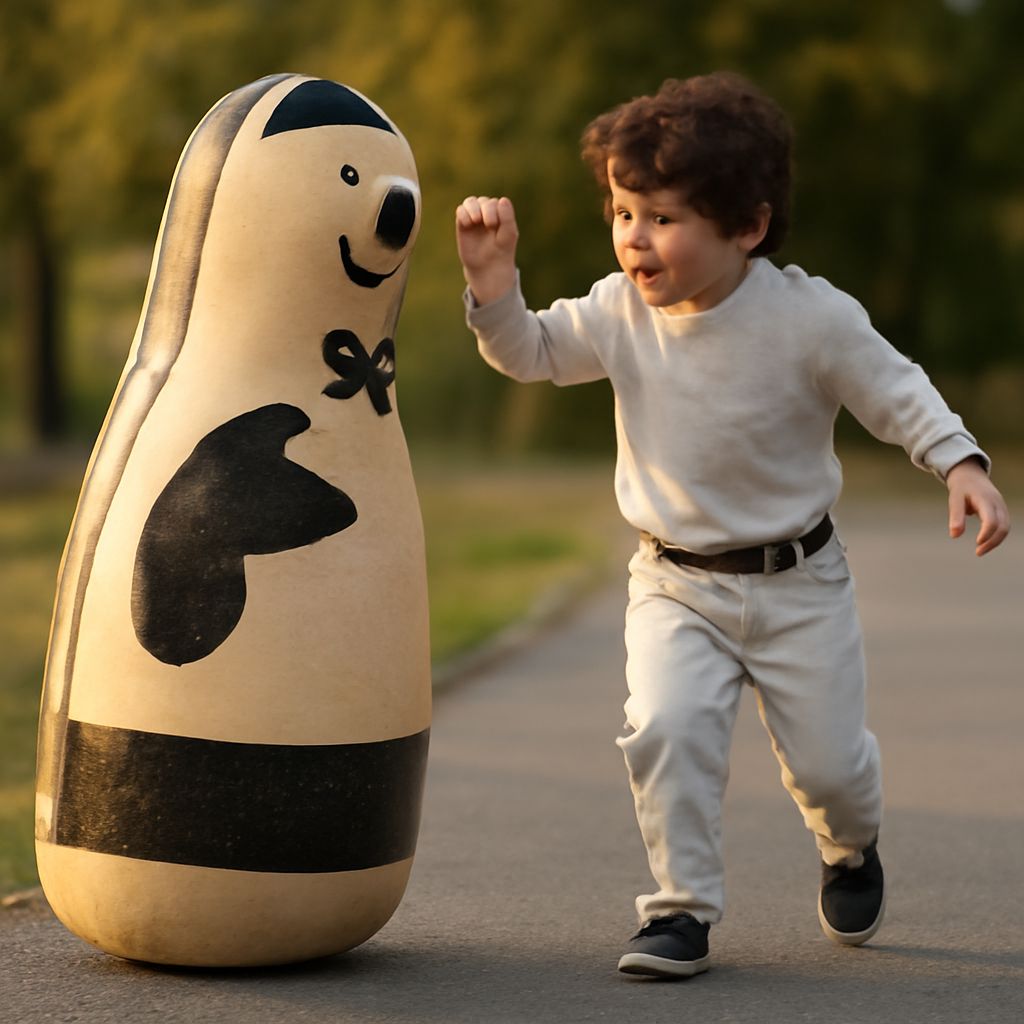
This question led directly to the bobo doll study, which took its name from an inflatable toy used as a punching target. Bandura, along with his colleagues Dorothea Ross and Sheila Ross, designed the research to test whether children would imitate aggressive actions simply by watching others. The study responded to growing debates over the influence of television and media violence, which were becoming more available in homes during that era.
The Bandura bobo doll experiment was groundbreaking because it challenged traditional ideas. It suggested that children could learn complex behaviors by watching adults, without direct rewards or punishments. This focus on modeling—learning by imitation—became a core idea in social learning theory, shifting how psychologists approached the study of behavior and development.
In summary, the Bobo doll research emerged from a need to explore how much influence social observation has on young minds. Its design and purpose set the stage for a landmark shift in psychological science.
Bandura’s Methodology and Setup
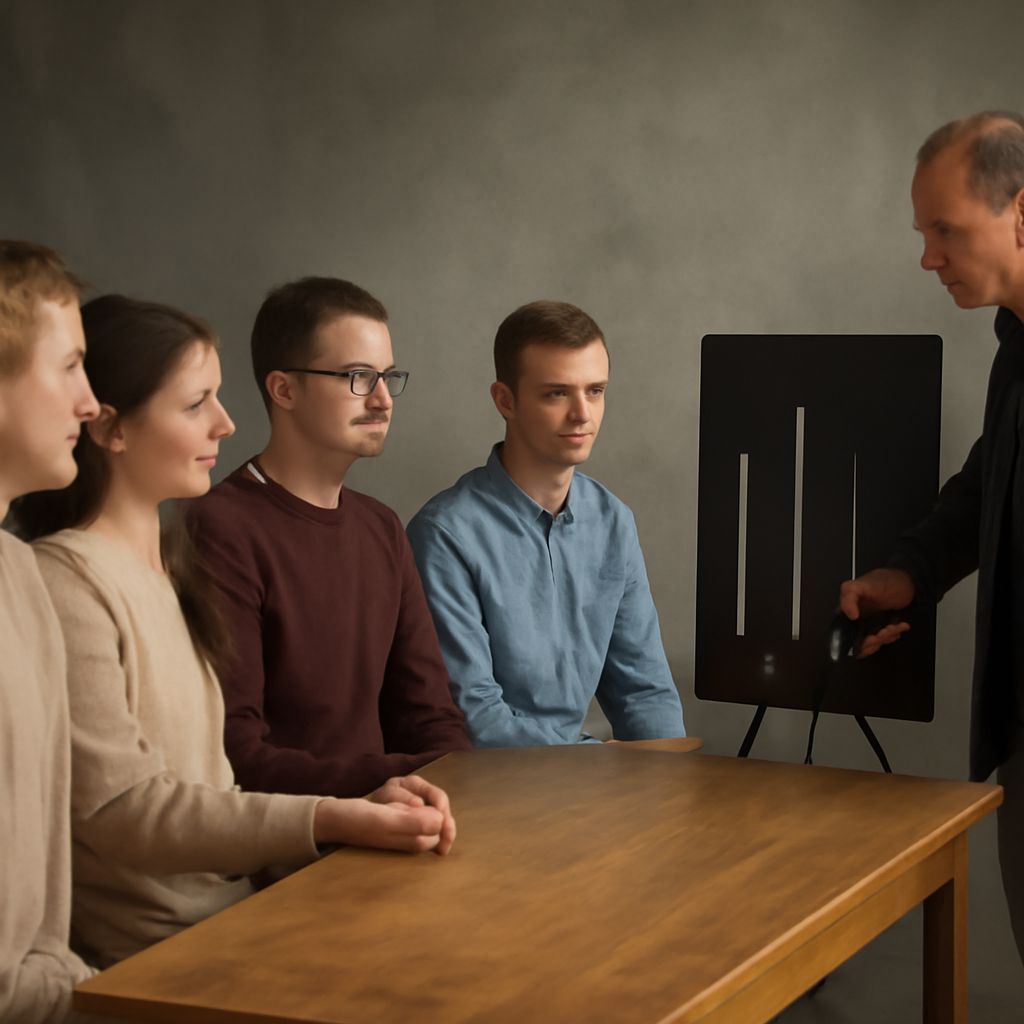
The experiment involved 72 children between the ages of 3 and 6, divided into groups to watch different adult behaviors. Some children observed adults behaving aggressively toward a bobo doll, striking it with a mallet and using harsh language. Others watched adults treating the doll kindly or simply ignoring it. There was also a control group with no exposure to adult models.
Bandura’s careful setup allowed for direct comparisons. The children who witnessed aggression were later placed in a room with a similar doll and observed through a one-way mirror. The goal was to see if they would repeat the aggressive actions they had seen.
What made the Bandura bobo doll experiment unique was its attention to detail. Researchers noted not only whether children imitated aggression but also if they used new aggressive phrases or behaviors not previously demonstrated. The methods also considered factors like gender differences, as boys tended to imitate male models more than female ones, and vice versa.
This methodological design provided strong evidence that observing aggression could lead to imitation, even in the absence of rewards. The bobo doll study also carefully recorded non-aggressive actions, offering a fuller picture of how children respond to what they see adults do. By using both qualitative and quantitative data, Bandura’s team set a high bar for later psychological research.
Key Findings and Results
The results of the Bandura bobo doll experiment were clear: children who observed aggressive adult models were much more likely to imitate those actions. They punched, kicked, and verbally assaulted the bobo doll, often using the same words and gestures as the adults had. In contrast, children who saw non-aggressive or passive models rarely showed such behavior.
One of the most important findings from the bobo doll study was the demonstration of novel aggression. Children didn’t just copy what they had seen; some created new ways to attack the doll, showing that social learning could inspire creative behaviors, not just mimicry. This suggested that exposure to violence could have broad and unpredictable effects on young minds.
The Bandura bobo doll experiment also highlighted the power of vicarious reinforcement. Children imitated aggression even when they saw no immediate reward or punishment for the adults. This finding challenged the dominant theories of the time, such as operant conditioning, which focused on direct rewards as the main driver of learning.
Overall, the bobo doll research demonstrated that children are highly sensitive to social cues and that observing aggression can strongly influence their own behavior. These results have been cited in thousands of studies and continue to shape how experts think about childhood development and media effects.
Impact on Psychology
The Bobo doll experiment had a huge impact on psychology, especially in the areas of social learning and child development. By proving that children learn by watching others, the study laid the foundation for Bandura’s social learning theory. This theory highlights how modeling, imitation, and observation play central roles in shaping behavior.
Thanks to the Bandura bobo doll experiment, psychologists began to see that behavior was not just the result of direct experiences or rewards. Instead, children could adopt new actions and attitudes simply by witnessing others, especially adults or authority figures. This finding helped explain how cultural norms and even prejudices are passed from one generation to the next.
The bobo doll research also influenced education and parenting. Teachers and parents became more aware of the example they set, realizing that kids often mirror the attitudes and reactions they observe. For instance, exposure to violence in the media or at home was shown to make children more likely to act aggressively themselves.
Over time, the bobo doll study shifted how researchers and practitioners think about aggression, learning, and even therapy. Its legacy is clear in modern discussions about media violence, bullying, and the power of role models in shaping healthy development.
Controversies and Criticisms
Despite its influence, the Bandura bobo doll experiment has faced several criticisms. Some argue that hitting an inflatable doll is not the same as showing real-life aggression. Critics suggest that the children may have felt encouraged to copy the adults’ behavior simply because they were in a research setting and wanted to please the experimenters.
Others point out that the bobo doll study mainly measured short-term effects, not long-lasting changes in behavior. While the children imitated aggression soon after seeing it, it is less clear if this influence lasted over time or led to ongoing aggression in real life.
Additionally, some scholars question the ethical standards of the experiment. The children were exposed to aggressive actions without fully understanding the reasons, and today’s guidelines would require more careful consent and debriefing. The context of the times explains some of these gaps, but modern researchers have learned to design studies with stronger protections for young participants.
Despite these issues, the bobo doll research continues to be cited as a classic example of experimental psychology. The debates it sparked have led to more careful, ethical, and nuanced studies on social learning and aggression.
Legacy in Modern Research
The influence of the Bandura bobo doll experiment extends far beyond its original findings. Today, researchers continue to explore how children and adults learn through observation in different settings—schools, families, online environments, and more. The bobo doll study has inspired work on media violence, video games, and the impact of positive role models in sports and entertainment.
Modern bobo doll research often focuses on digital media and social networks. For instance, psychologists now study how exposure to aggressive or prosocial behavior in video games affects children’s attitudes and actions. The original experiment paved the way for these new questions and methods, showing that watching others remains a powerful force in shaping what we do.
Bandura’s work also inspired new methods in therapy and education, especially with modeling techniques used to teach positive skills and reduce harmful behaviors. Teachers and therapists help children by demonstrating healthy ways to solve conflicts or manage emotions, building on the insights from the bobo doll experiment.
Ultimately, the legacy of the bobo doll study is its ongoing relevance to real-world problems. Whether addressing bullying, media influence, or the power of example, Bandura’s experiment remains a touchstone for anyone interested in how we learn—and how we can help future generations choose kindness over aggression.
Pro tips recap: The Bandura bobo doll experiment showed that children quickly imitate what they see. Adults and media are powerful models, so choose positive behaviors to display. Understanding social learning can help parents, teachers, and caregivers shape better outcomes for children. Remember: what children observe, they often become.