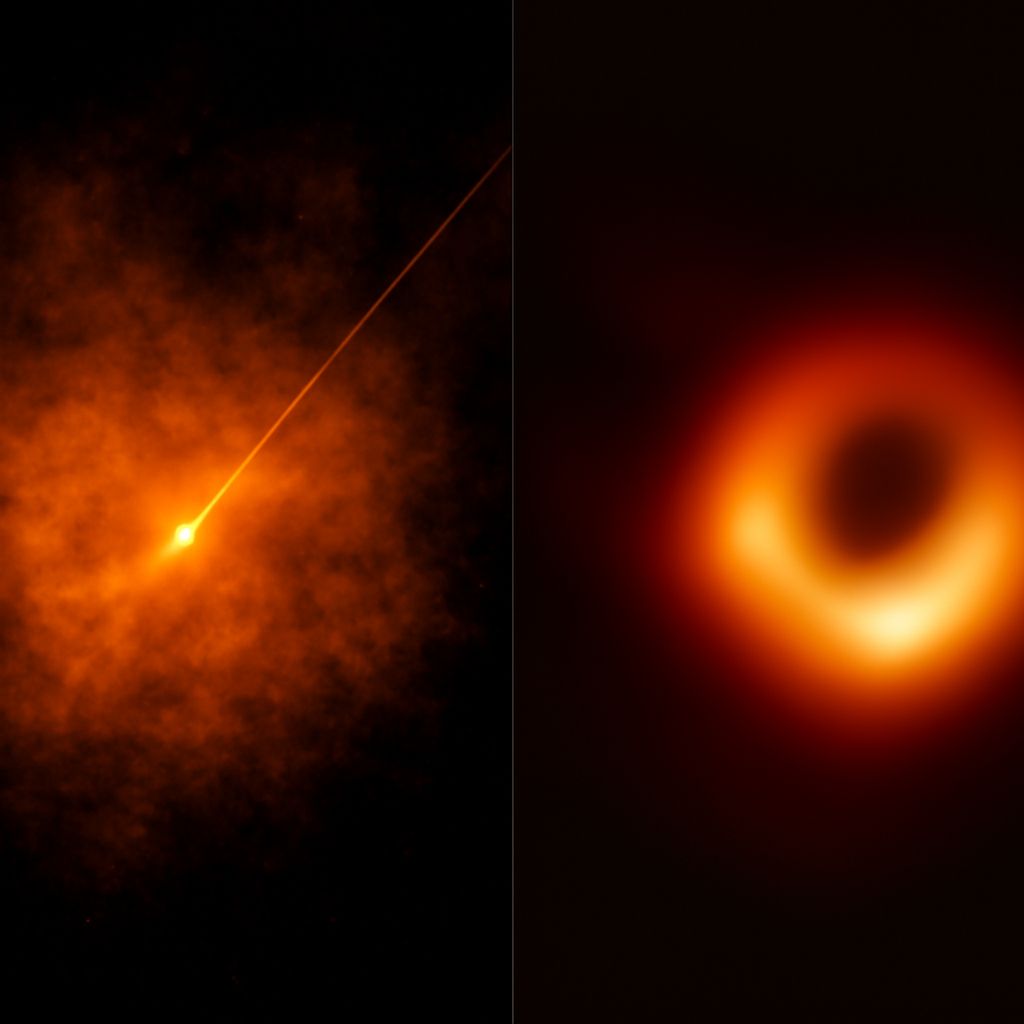
The capture of the first picture of black hole marks a significant milestone in our understanding of the universe. This achievement not only showcases the pinnacle of technological innovation in astronomy but also opens new pathways for future research. The photo of black hole provides a glimpse into the mysteries that lie beyond our galaxy, challenging our perception of space and time. As we delve into the journey that led to this extraordinary feat, we will explore its profound implications for the future of space exploration and the role of artificial intelligence in driving these discoveries.
The Journey to the First Picture of a Black Hole
The path to capturing the first picture of a black hole was long and filled with numerous challenges. For years, black holes were theoretical entities, described by Einstein’s theory of relativity, but without direct visual evidence. Scientists relied on indirect observations, such as the behavior of stars and gas clouds, to infer their existence. The quest to capture an actual image required overcoming significant technical and observational hurdles.
In 2019, an international team of astronomers did the unthinkable. By combining global efforts and cutting-edge technology, they captured the first-ever image of a black hole in the distant galaxy M87. This was made possible through the Event Horizon Telescope (EHT), a network of radio telescopes around the world that worked in unison to achieve this groundbreaking accomplishment.
How the Photo of the Black Hole Was Captured
Technological Innovations
The creation of the first picture of a black hole was a triumph of technological innovation. The EHT project utilized very-long-baseline interferometry (VLBI), a technique that synchronizes and combines data from multiple observatories across the globe. This setup effectively turned the Earth into a giant telescope, providing the necessary resolution to capture the black hole’s shadow.
Advanced algorithms played a crucial role in processing the massive amounts of data collected. These algorithms pieced together the fragmented data, forming a coherent image that unveiled the black hole’s silhouette. Without these technological advancements, the photo of black hole would have remained an elusive dream.
Global Collaboration
The success of the EHT project was also a testament to the power of global collaboration. Scientists from over 20 countries worked together, pooling their resources and expertise. This international cooperation was essential, as it ensured that telescopes across different continents could operate in perfect harmony.
By sharing knowledge and techniques, the team was able to overcome logistical and technical challenges that no single institution could have managed alone. The first picture of black hole is a shining example of what can be achieved when the global scientific community unites for a common goal.
Significance of the First Image of a Black Hole
The capture of the first image of a black hole has profound implications for our understanding of the universe. It provides direct visual evidence of a phenomenon that was once purely theoretical. The photo of black hole confirms predictions made by the theory of general relativity, offering a new way to test and refine our scientific models.
This image also serves as a powerful tool for educating the public about complex astronomical concepts. It brings the abstract notion of black holes to a tangible form, sparking curiosity and inspiring future generations of scientists. Furthermore, it lays the groundwork for new questions and theories about the nature of black holes and their role in the cosmos.
Future Implications of Black Hole Discoveries
Advancements in AI
The success of capturing the first picture of a black hole highlights the pivotal role of artificial intelligence in modern astronomy. AI technologies were instrumental in processing the vast datasets required to assemble the black hole’s image. These advancements will continue to be crucial in future astronomical endeavors, enabling the analysis of increasingly complex data with greater efficiency and accuracy.
As AI evolves, it will enhance our ability to detect and study black holes, potentially leading to new discoveries about their properties and behaviors. The integration of AI in astronomy promises to transform our understanding of the universe, making it possible to explore phenomena that were previously beyond our reach.
Impact on Space Exploration
The first image of a black hole is just the beginning of a new era in space exploration. This achievement has spurred interest in studying other cosmic phenomena, such as neutron stars and gravitational waves. As we deepen our understanding of black holes, we gain insights into the fundamental forces that shape the universe.
Future missions may expand upon this work, employing more advanced telescopes and technologies to explore these mysterious objects in greater detail. The knowledge gained from black hole research will inform the design of space missions, potentially leading to new breakthroughs in propulsion technologies and interstellar travel.
In summary, the first picture of black hole represents a landmark achievement in astronomical history. It exemplifies the power of technological innovation and global collaboration, setting the stage for future discoveries that will continue to shape our understanding of the universe. As we look to the future, the integration of artificial intelligence and the ongoing study of black holes will undoubtedly unlock new realms of possibility, fueling humanity’s quest to unravel the mysteries of the cosmos.