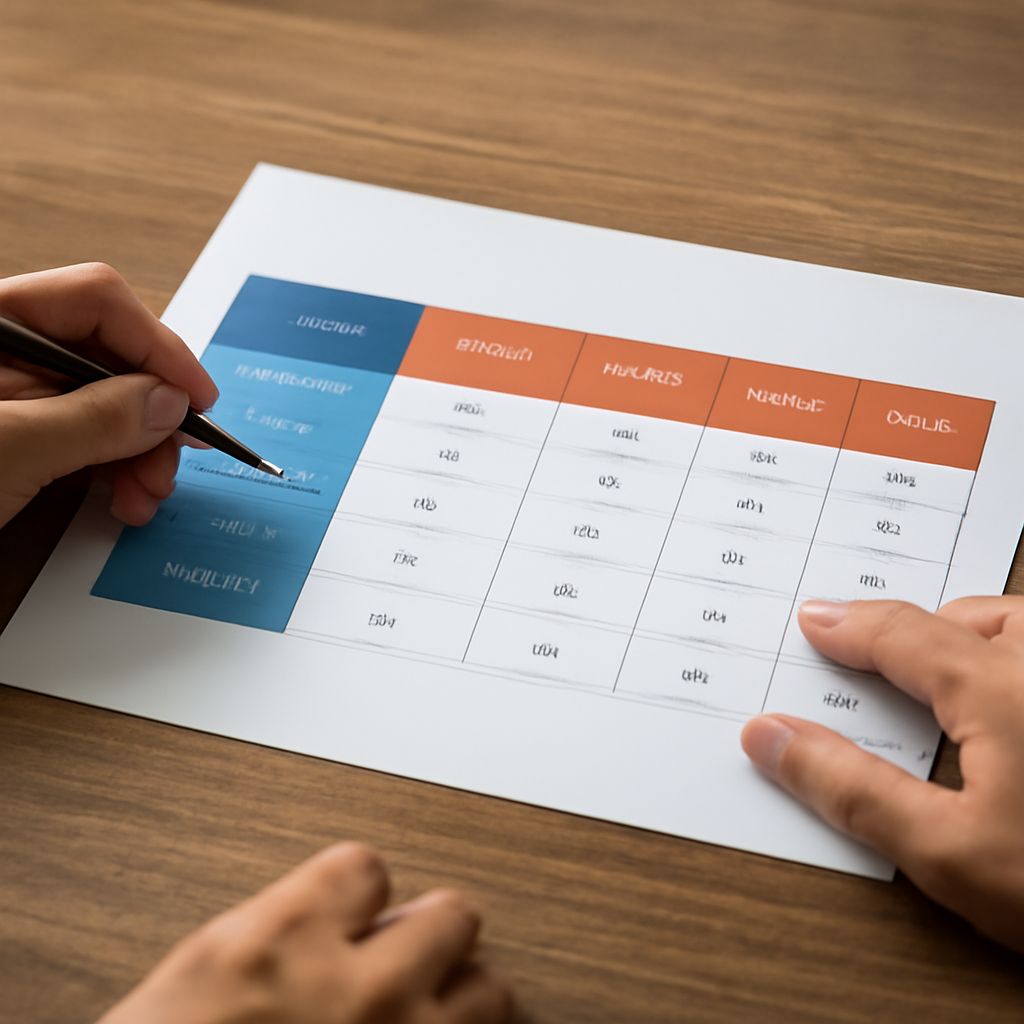
A calendar can show five apparently free hours on Tuesday while concealing a commute, a deadline, a parent’s appointment, and the need to eat. Those details explain why managing time matters: a plan makes competing demands visible before each one claims the same hour. Its value lies in helping a person give chosen priorities a place in a real week.
That does not require filling every gap. A useful schedule accounts for obligations, focused attention, recovery, and events that cannot be predicted. It also reveals when the work requested simply exceeds the time available, making a conversation about what to delay or decline more concrete.
Importance of time management in everyday decisions
Time management is the practice of deciding how available time will be used and adjusting those decisions as conditions change. It can include choosing priorities, estimating duration, placing activities on a calendar, and setting boundaries around commitments. A paper list and a digital calendar can both serve the purpose; neither is valuable merely because it is detailed.
The importance of time management becomes clearer when a goal requires repeated attention. A person who wants to learn a language, support a relative, or finish a report must fit that intention among existing demands. Deciding that the goal matters is only the first step. Assigning a realistic period to it creates an opportunity to act, while exposing what must move to make room.
Why is time management important when life is unpredictable? Because plans can be revised. If an urgent task takes an afternoon, a visible schedule shows which commitment was displaced and when it might be rescheduled. Without that picture, a person may discover the conflict only when a deadline arrives or a promise is broken.
A meta-analysis of time management research found associations with performance and well-being. The findings support the idea that these practices can help, but they do not show that a particular calendar system causes success in every setting. Much depends on workload, autonomy, resources, and the demands a person faces.
From priorities to actual commitments
A priority is meaningful only in relation to alternatives. Someone may value an ambitious project and evenings with family, but an unexpected assignment can make both difficult to protect in the same week. Planning does not eliminate that tension; it makes the choice explicit enough to negotiate.
A useful first pass separates obligations from intentions. A medical appointment has a specific time. A report may have a deadline but several possible working periods. Exercise may be flexible, yet still important enough to reserve time for. Once these commitments are visible, the planner can ask how much space remains and which desired activities genuinely fit.
That distinction also clarifies why time management is important for keeping promises. Before agreeing to a new request, someone can look at existing commitments and estimate the trade-off. If the work will take three hours and only one is available, a realistic answer might be to offer a smaller contribution, ask for another deadline, or decline. The calendar provides evidence for the conversation rather than a reason to blame the person making the request.
Urgency and importance are different tests. An unanswered message may feel urgent because it is visible, while a report due next week may matter more but require an uninterrupted hour. Some messages do require immediate attention. The point is to identify the actual consequence of waiting rather than allowing every notification to decide the order of work.
Attention is part of the schedule
An hour available on paper is not always an hour available for demanding thought. A complex task may require a person to reconstruct their place after a call, locate the relevant information, and regain concentration. Research on resuming interrupted tasks examines this recovery period and the possibility of errors; the cost varies with the task and interruption.
A plan can reduce avoidable switches. For example, a report writer might reserve a morning block for analysis, silence nonurgent notifications when their role permits, and answer routine messages afterward. Someone whose job requires immediate responses might instead arrange a short handoff with a colleague or choose a quieter period. The design must fit the responsibility: ignoring a time-sensitive request can create a larger problem than the interruption itself.
Among the benefits of time management is the ability to match work to available attention. A demanding calculation may belong in a protected block; routine filing may fit a shorter interval. The purpose is not to make every minute productive, but to reduce friction around tasks that matter.
A realistic example of one week
Consider Maya, a fictional employee who works from 9 a.m. to 5 p.m., commutes, and helps her father with appointments. She needs to finish a report by Friday, wants to attend an evening class, and has promised a friend a call. Her working hours include meetings and an unpredictable stream of requests, so she cannot devote every free space to the report.
On Monday, Maya reviews her obligations and estimates that the report needs four focused hours plus a final check. She places two 90-minute work blocks on Tuesday and Wednesday mornings and reserves an hour on Thursday afternoon. She also leaves a short buffer after each block for overruns. Her father’s appointment goes on Wednesday’s calendar with travel time, and she confirms who will handle urgent messages while she is away.
Tuesday’s block produces less than expected because a client issue needs attention. Rather than quietly extending the work into the evening, she checks what remains: one section needs an hour and the final review needs 30 minutes. She moves a low-priority internal meeting, with agreement, and uses the recovered time on Thursday. If the meeting could not move, the next step would be to discuss a narrower report or a different deadline with its recipient.
The class remains on Thursday evening, and the call with her friend is scheduled for Saturday. Maya also keeps ordinary meal and sleep time in view. This is an illustration, not a universal template: someone on rotating shifts or with less control over requests would need a different arrangement. The benefit of managing time in this example is visibility. When the week changes, the affected commitments are identifiable and a trade-off can be negotiated.
Rest and limits belong in the plan
A plan that assumes constant output will fail as soon as ordinary needs appear. Meals, sleep, breaks, travel, and personal care consume time because people need them. Treating these as optional leftovers can make the remaining schedule look feasible while making the week harder to sustain.
Recovery can be an end in itself: time with friends or an unstructured evening deserves a place when it matters to the person.
The benefits that come from managing time have limits. A planner cannot make a care appointment shorter, create affordable childcare, or remove an unreasonable workload. It can document the conflict and support a request for help, a revised deadline, or a smaller scope. When a person has little control over their schedule, the available choices may be narrow; treating that constraint as poor discipline would misidentify the problem.
Estimates are imperfect. If a weekly report consistently takes two hours instead of one, the next schedule should use the observed duration; if it no longer fits, something else must change.
Build a plan that can be revised
A workable approach can be brief. First, mark fixed obligations and the time needed to reach them. Next, choose a small number of outcomes for the week and estimate the work required. Place those activities in available periods, allowing for ordinary interruptions. Finally, compare the total with the hours actually available and decide what to reduce, move, or discuss.
The practical value of planning time is that each revision has a reason. If a task moves twice, that may indicate an unrealistic estimate, a lower priority, or a need for assistance. The response depends on which explanation fits. A crowded calendar is information about the plan and the conditions around it, not a measure of personal worth.
Why does organizing time matter beyond a busy workday? It can make space for obligations and activities that would otherwise be crowded out by whatever is most immediate. The relevant measure is whether the arrangement serves the person’s priorities while respecting the constraints they actually face.
After reading, open the next seven days in a calendar. Add one important commitment that currently has no place, include the time it realistically requires, and decide which existing activity will move if the space is already occupied.