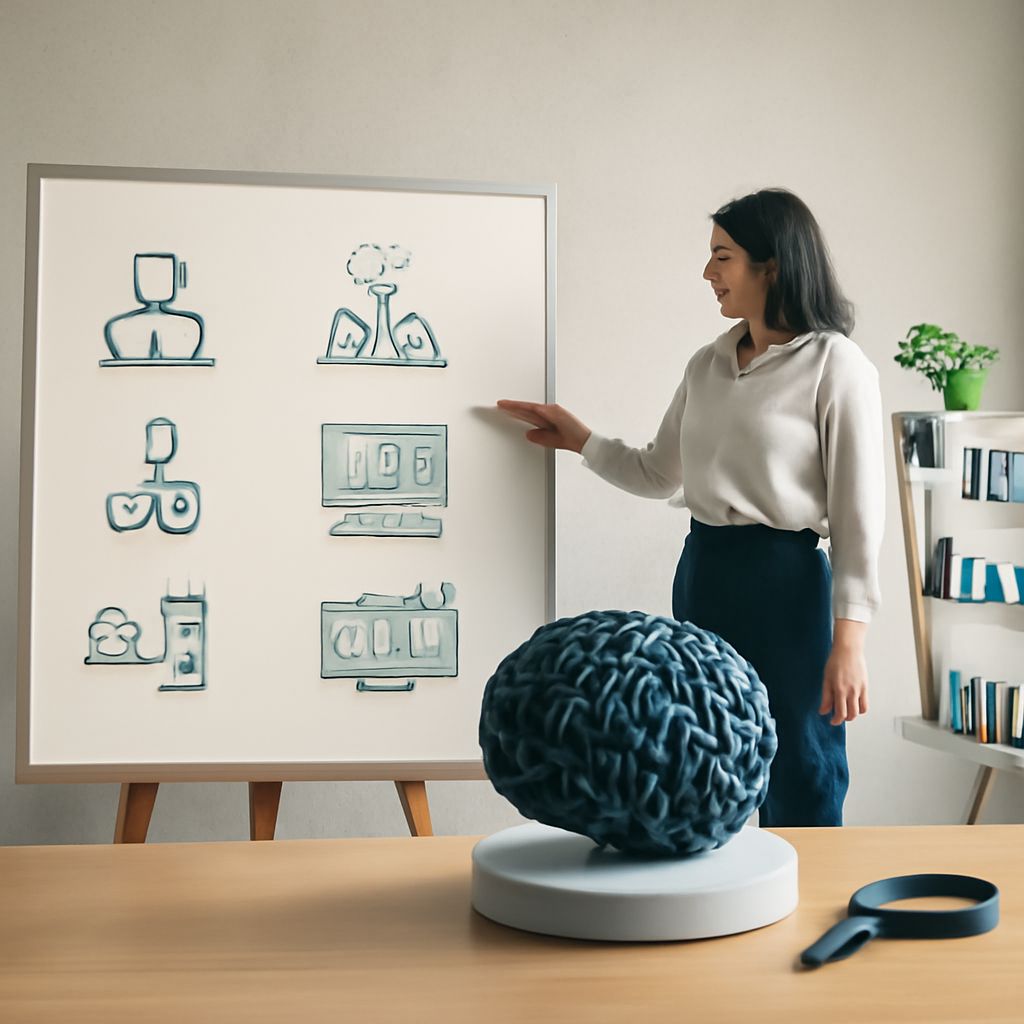
Human beings possess a remarkable range of skills that go far beyond simple book smarts. The concept of types of intelligence helps us understand how different abilities shape our lives, learning, and relationships. Recognizing the existence of different intelligences allows us to see the full spectrum of human potential—and realize that intelligence is not a one-size-fits-all concept.
As we explore the main forms of intelligence, you’ll discover how different types of intelligences can be found in every person. Whether in academic settings or everyday life, understanding types of intelligence psychology opens doors for personal growth and better connection with others. Let’s dive into what intelligence truly means and how it influences our world.
Defining Types of Intelligence
What does it really mean to be intelligent? For centuries, people viewed intelligence as a single, measurable trait—often linked to logic, memory, or verbal skills. Over time, researchers began to realize that intelligence is multi-dimensional and cannot be summed up by one test score.
The idea of types of intelligence refers to the many ways people can be smart. From creativity and social skills to kinesthetic and spatial awareness, intelligence manifests in diverse forms. This broader definition challenges old stereotypes and recognizes the worth in abilities like empathy, athleticism, and musicality.
When we talk about different intelligences, we’re acknowledging that everyone has strengths and weaknesses. Some thrive in problem-solving, others in understanding emotions or creating art. By identifying these variations, we can better support each person’s unique talents.
Today, educators and psychologists apply these insights to help people learn and grow in ways that fit their natural abilities. The focus has shifted from trying to measure everyone the same way, toward celebrating and nurturing all different types of intelligences.
Major Theories of Intelligence
Our understanding of types of intelligence psychology is shaped by several influential theories. Each offers a unique perspective on what it means to be intelligent and how intelligence can be measured or developed.
One of the most widely known models is Howard Gardner’s Theory of Multiple Intelligences. Gardner argued that there are at least eight distinct types of intelligence, such as linguistic, logical-mathematical, spatial, and interpersonal. This theory revolutionized the way educators and psychologists think about human potential.
Another key approach is Robert Sternberg’s Triarchic Theory, which describes intelligence as having three aspects: analytical, creative, and practical. This framework emphasizes real-world skills and adaptability, going beyond traditional academic performance.
Some researchers, like Daniel Goleman, have focused on emotional intelligence (EQ)—our ability to understand, use, and manage emotions. While not always considered a classic intelligence, EQ underscores the importance of skills like empathy and social awareness.
These theories highlight the richness of different intelligences and challenge the idea that intelligence is fixed or limited to specific areas. By looking at intelligence through multiple lenses, we better appreciate the many ways people excel.
Exploring Different Intelligences
Linguistic and Logical-Mathematical
Linguistic intelligence is the ability to use words, languages, and communication effectively. People strong in this area excel in reading, writing, storytelling, and public speaking. They often love books and pick up new languages quickly.
Logical-mathematical intelligence involves reasoning, problem-solving, and working with numbers or abstract patterns. Mathematicians, scientists, and engineers often demonstrate this type of intelligence. It’s not just about math—it’s also about seeing connections and figuring out puzzles.
These forms relate closely to traditional academic success, but remember, they are just two out of many different types of intelligences. While some people have a natural gift for language or logic, others shine in very different ways.
Spatial and Bodily-Kinesthetic
Spatial intelligence is about visualizing and manipulating objects in your mind. Architects, artists, and pilots are often strong in this area. They have a sharp sense of direction and can easily read maps or visualize objects from different angles.
Bodily-kinesthetic intelligence is the ability to use your body skillfully. Dancers, athletes, surgeons, and craftspeople often possess this type of intelligence. They are coordinated, have fine motor control, and can express ideas or solve problems through movement.
Both spatial and bodily-kinesthetic forms show how physical and visual skills are important parts of human intelligence. These abilities help us adapt, create, and interact with the world in unique ways.
Musical, Interpersonal, and Intrapersonal
Musical intelligence is the capacity to understand, create, and enjoy music or rhythmic patterns. Musicians, composers, and even those who learn best through music demonstrate this type of intelligence.
Interpersonal intelligence is about understanding and connecting with others. People with this skill are good at reading social cues, resolving conflicts, and working in teams. Teachers, counselors, and leaders often excel here.
Intrapersonal intelligence refers to self-awareness and the ability to understand one’s own emotions, motives, and goals. People with strong intrapersonal skills make thoughtful choices and often pursue personal growth.
These different intelligences reveal how crucial it is to value emotional and creative skills alongside academic ones. Relationships, self-reflection, and passion for music are all signs of human potential.
Naturalistic and Beyond
Naturalistic intelligence is the ability to recognize patterns in nature and understand living things. Biologists, gardeners, and animal trainers often stand out in this area. They are sensitive to the environment and excel at observing and categorizing plants, animals, and weather patterns.
Some experts suggest additional types, such as existential intelligence (wondering about life’s big questions) or digital intelligence (navigating technology and virtual spaces). Our understanding of the types of intelligence continues to evolve as society changes.
These newer perspectives invite us to keep an open mind about human abilities and notice talents that may have gone unrecognized in the past.
Applications of Various Forms of Intelligence
Recognizing different types of intelligences has transformed education and the workplace. Teachers are now encouraged to use varied teaching methods, like group work, hands-on activities, music, and visual aids, to support all learners.
In business, understanding the types of intelligence psychology helps managers create well-rounded teams. A diverse workforce with complementary skills can solve problems creatively and relate better to customers.
At home, parents can nurture their children’s unique strengths by providing opportunities for music, sports, art, or nature activities. This approach builds confidence and a lifelong love of learning.
These real-world applications show the power of honoring different intelligences. When people feel valued for their natural abilities, they are more motivated and engaged in their pursuits.
Nurturing Different Types of Intelligences
Every individual benefits from having their unique strengths recognized. To nurture different types of intelligences, it’s important to provide a variety of experiences and challenges, both in school and at home.
Learning can happen in many ways—not just through textbooks. For linguistic learners, encourage storytelling or creative writing. For those with musical or bodily-kinesthetic talents, try dance, sports, or music lessons. Nature walks, puzzles, and social games can also spark different abilities.
Encouraging self-reflection and emotional skills helps develop intrapersonal and interpersonal intelligence. Journaling, group discussions, and mindfulness activities are valuable tools. Support for curiosity in nature and technology can lead to growth in naturalistic and digital intelligence.
By honoring all types of intelligence, families, schools, and workplaces create environments where everyone can thrive and reach their full potential. It’s not just about finding what someone is good at—it’s about helping them grow in every direction.
Conclusion: Embracing Human Potential
Understanding the many types of intelligence is key to unlocking human potential. Each person brings a unique blend of strengths—from problem-solving to creativity, empathy to physical skill.
When we recognize and nurture different intelligences, we empower everyone to contribute and flourish. Embracing these differences expands our vision of what it means to be smart, and helps us build a more inclusive, thriving society.