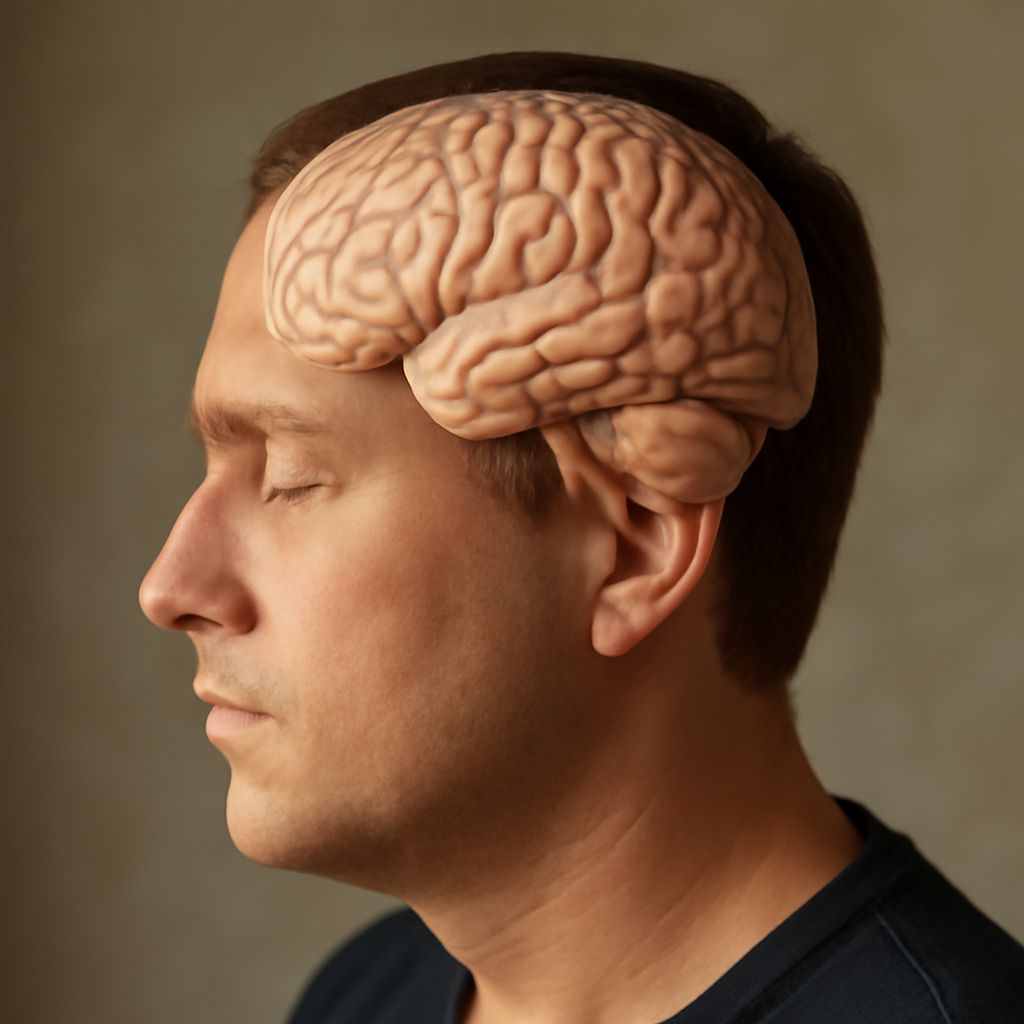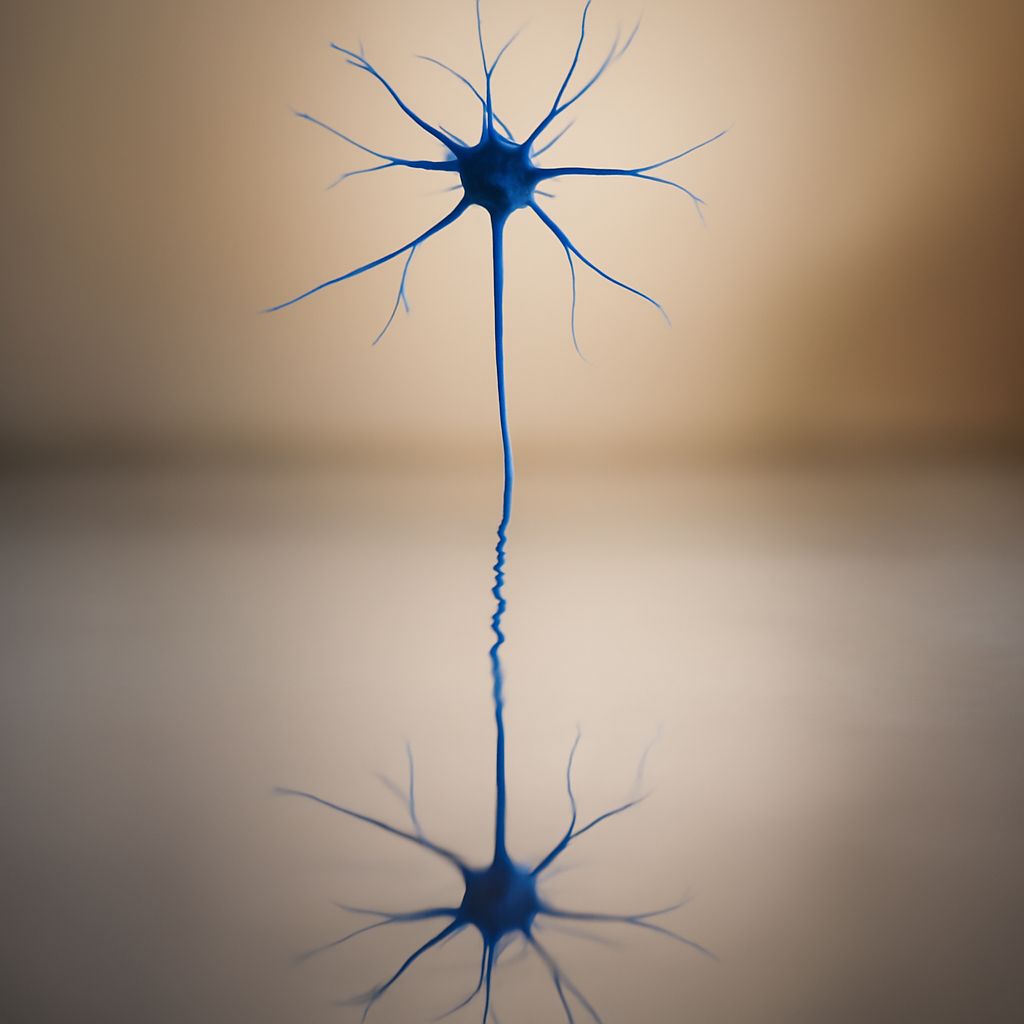
Why can watching someone grasp a cup involve parts of the brain associated with action? One answer comes from cells that respond both when an individual performs an action and when that individual observes a related action. What, then, are mirror neurons? The definition of these mirror neurons rests on a measurable pattern of activity, while the question of what that pattern accomplishes remains open to investigation.
The term has attracted claims far beyond the laboratory, from learning by imitation to understanding other minds. The evidence is most compelling at the level of individual cells recorded under specific conditions. Understanding what mirror neurons are, and what their activity can tell researchers, requires a closer look at those conditions.
Mirror Neurons Definition: A Cell With Two Responses
A neuron communicates through electrical signals. A definition for a mirror neuron starts with how it responds in two situations. Researchers describe a cell as having mirror properties when its activity changes during both the performance of an action and the observation of a related action performed by another individual. The response is identified by comparing the same recorded cell across conditions, rather than by finding activity in the same general brain region.
In psychology, the definition of mirror neurons therefore concerns a relationship between observation and action. It does not mean that every movement automatically produces a perfect internal copy. Some cells respond most strongly to a close match between observed and performed actions; others respond to a broader relationship, such as grasping an object in different ways.
The mirror neurons definition psychology students encounter describes a cell’s responses, whereas its psychological function must be tested separately. A cell could take part in several processes, and the observation that it responds in two situations does not by itself reveal which process it supports.
The Macaque Experiments
In a 1992 study, Giacomo di Pellegrino and colleagues recorded from individual neurons in an area of macaque premotor cortex known as F5. Some cells responded when the monkey performed a hand action and when it watched an experimenter perform a related action. The researchers examined the relationship between the observed movement and the action effective in activating the recorded neuron.
The experiment helped clarify what a mirror neuron is: a cell identified by its response across these conditions. This finding mattered because a region associated with producing actions also contained cells responsive to actions seen in another individual. The observation challenged a simple division in which visual areas merely perceive and motor areas merely move. It suggested a connection between the sensory description of an action and the neural machinery involved in acting.
Yet the experiment did not ask a neuron to explain what the monkey understood. The animal’s behavior and the cell’s electrical activity were measured under particular circumstances. To infer the role of such responses in action recognition, researchers need additional experiments that distinguish possible explanations and test what happens when relevant neural activity is altered.
From Individual Cells to Human Brain Systems
Human research uses several methods, each with a different view of the evidence. Functional magnetic resonance imaging, or fMRI, measures changes related to blood flow across volumes of brain tissue. Researchers can compare activity while volunteers watch an action with activity while they perform one. Overlapping signals identify regions worth studying, but a single fMRI measurement includes many cells. It cannot establish that the same individual neuron responded in both conditions.
Researchers sometimes call a network of regions active during action observation and execution the mirror neuron system. That label for a system of mirror neurons is a proposal about a collection of brain areas and their possible roles; it is not equivalent to a direct recording from each cell in those areas. Separate populations of neurons within a small region could contribute to the two signals, and the measured overlap alone cannot settle that question.
There is also direct human evidence. In a 2010 study, Roy Mukamel and colleagues recorded individual neurons from people undergoing electrode monitoring for epilepsy surgery. Participants watched and performed hand gestures or facial expressions. Some recorded cells showed responses related to both observation and execution. The clinical setting made such recordings possible, but it also constrained where electrodes could be placed and which patients could participate.
The result supports the existence of cells with relevant response properties in humans. It does not provide a complete map of every such cell, or show that people with epilepsy represent the full range of the population. The distinction between a neuron and wider mirror-neuron systems remains important when interpreting either result. Knowing what mirror neurons are in a recording does not settle how a wider network operates.
Does Activity Explain Understanding?
Suppose a person watches someone reach toward a mug. Movement, context, and previous experience all provide clues: the person may be picking it up to drink, clearing a table, or moving it out of the way. The visible action alone does not disclose which intention is correct.
One influential hypothesis is that activity linking observed and performed actions contributes to recognizing what another individual is doing. That is a meaningful research question, not a demonstrated power to read minds. A neuron that responds to grasping cannot, solely from that response, establish whether the observed person is thirsty or tidying up.
A stronger test would compare recognition when relevant activity is disrupted against recognition under a suitable control condition. Even then, researchers must consider whether the intervention changes attention, movement, or another process that also affects performance. Correlation identifies a candidate mechanism; carefully designed interventions help establish what it contributes.
The question of what mirror neurons are includes how their properties develop. A review by Cook and colleagues discusses an associative account in which experience links seeing actions with performing them. Other researchers have proposed different accounts. The existence of the response does not, on its own, decide whether it is innate, learned, or shaped by both biological development and experience.
Imitation, Empathy, and Autism
Watching a teacher demonstrate a movement can help a student learn, but the route from observation to skill involves attention, memory, feedback, and practice. Mirror-like responses are a plausible part of the story, not a complete explanation of imitation. Copying a tennis serve, for example, requires adjusting timing and force through repeated attempts; merely watching the racket move does not supply that feedback.
Empathy is broader still. Recognizing a hand movement differs from understanding another person’s circumstances or caring about how they feel. Brain responses associated with observation may be relevant to some aspects of social experience, but the original action studies do not prove that these cells generate empathy. A claim about a complex ability needs evidence from tasks that actually measure the ability and distinguish it from related processes.
Similar care is needed with autism. Social communication and behavior vary widely among autistic people, and a theory about action observation cannot establish a single cause of autism. Differences reported in a brain measure do not, without further evidence, establish whether they are a cause, a consequence, or a feature associated with other differences. Neither a diagnosis nor an assessment of an individual’s capacity for empathy follows from this research.
Reading New Claims About the Brain
When a report makes a sweeping claim, the first question is what researchers actually measured. Was the study recording individual cells, measuring a broad brain signal, or observing behavior? Were the participants monkeys, clinical patients, or a wider group of volunteers? A result can be valuable within its design without answering every question a headline attaches to it.
The next question is what comparison supports the conclusion. A cell responding during watching and acting is evidence of a shared response in that cell. A change in behavior after a targeted intervention may offer stronger evidence about function, provided alternative effects of the intervention are considered. Results from several methods can complement one another because their limitations differ.
So, what are mirror neurons? They are cells identified through related responses during action and observation. Whether those responses explain a particular form of social understanding is a broader claim that requires its own evidence.