A sudden sense that the present has happened before is sometimes treated as proof of a forgotten memory or a prediction. Neither conclusion follows from the feeling alone. The causes of déjà vu are still being studied, and the experience is better understood as a striking sense of familiarity arising when its source is unclear.
The phrase means “already seen” in French. In ordinary use, the meaning of déjà vu is the impression that a current situation has been experienced before, despite knowing that it is new or being unable to identify when the earlier experience occurred. That tension between familiarity and uncertainty is what makes the moment so distinctive.
De Ja Vu Meaning and the Feeling of Familiarity
A visitor enters a new café and has the unsettling impression that the room, the conversation, and the next few seconds are somehow familiar. The visitor does not necessarily remember being there before. The sensation may be strong precisely because it arrives without the usual details that would explain it.
The de ja vu meaning becomes clearer when compared with ordinary recognition. Seeing a former classmate and remembering a particular conversation supplies both familiarity and an identifiable source. Seeing a face that seems familiar but cannot be placed supplies familiarity without the same recollection. Déjà vu often adds another element: the situation feels familiar even as the person recognizes that it should be new.
Memory researchers distinguish a sense of familiarity from recollection of contextual details, although these processes interact. A familiar feeling can be useful when it points toward a real previous encounter. It can also be misleading, especially when an experience shares features with an earlier one that cannot readily be recalled.
When a new scene resembles an old one
To ask what causes deja vu is to ask how a feeling of familiarity can arise without a clear source. One explanation is that the present situation resembles a previous experience in some respect, while the earlier source remains inaccessible. A café may have the same arrangement of tables, windows, and a counter as a room visited years before. The furniture and location can be different while the spatial pattern feels familiar.
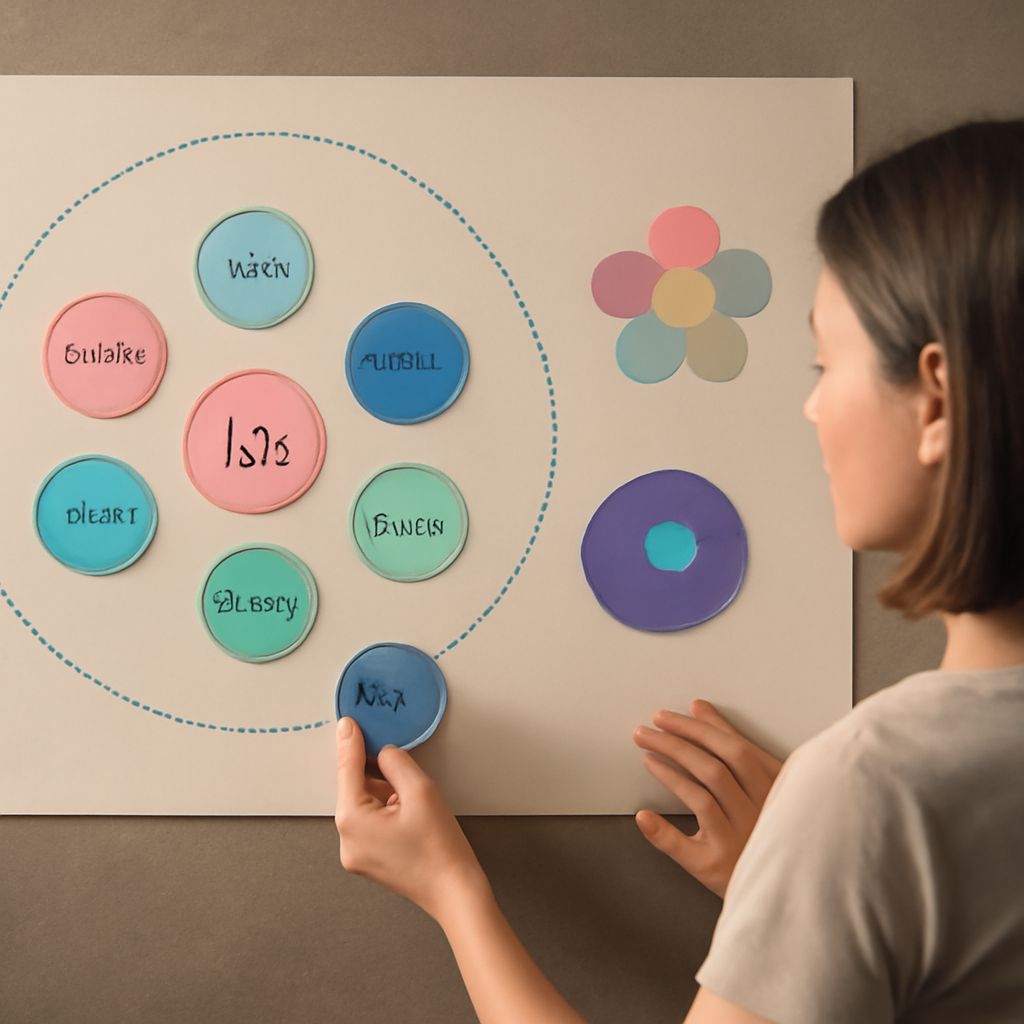
Researchers have tested versions of this idea in controlled settings. In a virtual-reality study, participants explored scenes that sometimes shared a layout with an earlier scene. When they did not recall the earlier scene, greater similarity was associated with stronger familiarity and more reports of déjà vu. The result supports the possibility that an unrecalled resemblance can contribute to the experience.
It does not show that every episode has that cause. A laboratory scene is designed to create and measure a particular kind of familiarity; a spontaneous experience in everyday life may involve other features or processes. The strength of the study is that it demonstrates one plausible route under controlled conditions, not that it traces the source of every personal episode.
A smell, a pattern of light, a voice, or the arrangement of objects might provide a cue without identifying the earlier event. That is a useful hypothesis to consider, but the exact cue in any given moment may remain unknown. Searching for a source can sometimes reveal a resemblance and sometimes leave the feeling unexplained.
Familiarity without a clear recollection
Recognition is not a single all-or-nothing operation. A person can know that a melody is familiar without remembering its title, or recognize a street without immediately recalling a previous visit. In those cases, a general signal of familiarity is available before the details needed to explain it.
An explanation of what déjà vu means begins with that difference. A proposed account of déjà vu extends this idea to an entire situation. The present feels familiar, while contextual information suggests it is new or does not provide a matching memory. The unusual experience may reflect that mismatch. The claim is about how the feeling might arise, not proof that a complete past event is hidden somewhere waiting to be recovered.
Other accounts of why déjà vu occurs have been proposed, including variations in how ongoing information is processed or monitored. These are research questions rather than settled descriptions of a single cause. Because episodes are usually brief and unpredictable, researchers cannot easily observe the relevant processes before, during, and after a naturally occurring episode in everyday life.
A study of laboratory analogues also highlights a methodological problem: a feeling of familiarity without recollection resembles déjà vu, but it may not capture every feature of a spontaneous episode. Asking participants to report their experience is necessary, yet different people may use the label in slightly different ways.
Does the feeling predict what happens next?
Some people report that they feel able to anticipate what will happen during an episode. The feeling can be compelling, but confidence and accurate prediction are different outcomes. A person may sense that the next moment is known without being able to state it correctly in advance.
In experimental work on familiarity and prediction, researchers examined this distinction using controlled scenes. Their work investigated whether a feeling of prediction during a familiar-seeming experience corresponded to actual predictive ability. The design matters: a prediction must be made before the event, with an appropriate comparison, rather than reconstructed after the outcome is known.
This does not diminish the vividness of the experience. It explains why vividness alone is not evidence that the future has been seen. Memory and expectation can make a moment feel meaningful even when the source of that feeling is uncertain.
Why answers differ between episodes
People encounter many overlapping settings over a lifetime. A new hallway may share its proportions with a school corridor; a conversation may follow a familiar rhythm; a piece of music may resemble another without being identical. Each provides a possible route to a sense of recognition, but the mere existence of a possible resemblance does not prove it caused a particular episode.
The question of what causes deja vu is therefore best approached as a set of competing or complementary explanations. Similarity to an unrecalled scene has experimental support. Other proposed processes concern how familiarity and novelty are evaluated. To understand what brings on déjà vu, researchers still need to establish when these mechanisms operate and whether the same account applies across different kinds of episode.
Anecdotes can suggest questions, but they have limits. A person describing several deja vus may remember the most surprising moments and overlook ordinary moments that felt familiar for an obvious reason. Differences in definitions, memory, and reporting also make comparisons between people difficult.
Everyday experiences and medical context
Brief, occasional episodes occur in people without an identified medical condition. An isolated experience does not by itself establish a neurological diagnosis. Some focal seizures, however, can include an intense feeling of familiarity; other signs may include altered awareness, unusual sensations, or repetitive movements. Epilepsy Action describes déjà vu as one possible symptom of a temporal-lobe seizure.
If episodes become frequent, prolonged, or are accompanied by confusion, loss of awareness, or other concerning symptoms, a clinician can assess the pattern and decide whether further evaluation is appropriate. The surrounding details matter: how long episodes last, what happens before and afterward, and whether someone else observes a change can help a professional understand the report.
This distinction also protects the scientific question from a common shortcut. Findings about seizure-related experiences can inform research into memory and the brain, but they do not mean that every ordinary episode has the same mechanism or medical significance.
The name and what remains uncertain
The definition of déjà vu concerns the feeling, not proof of an earlier event. The usual English spelling retains the French accents as “déjà vu,” though “deja vu” is also common. Variants such as de ja vou appear in informal writing; spelling differences do not identify different experiences. The term for déjà vu describes the sensation, not a particular cause.
The reasons for a sudden feeling of déjà vu may include familiarity produced by an unrecalled resemblance, but a specific source is often impossible to identify after the fact. Rather than forcing a remembered explanation, it is reasonable to leave the cause open when the evidence is missing.
Does déjà vu mean that the same event really happened before? Not necessarily. It means the present feels familiar; identifying an earlier event requires additional evidence beyond the feeling itself.